 how-to
How to Ensure Game Day Seating: Group Planning Guide
Table of Contents
- How to Ensure Game Day Seating for Your Group
- Understanding Stadium Seating Maps and Venue Layout
- Sports Bar Reservation Tips for Securing Your Spot
- Group Event Planning for Game Day Success
- How to Host Fantasy Football Draft Nights With Guaranteed Seating
- Arrival Timing and Venue Entry Logistics
- Optimizing Comfort and Line of Sight for Game Day
- Frequently Asked Questions
Last Updated: September 20, 2026
How to Ensure Game Day Seating for Your Group
Game day seating requires planning ahead. Whether you're watching at a stadium or gathering at a sports bar, securing spots for your entire group takes strategy and timing.
The biggest mistake groups make is waiting until game day to figure out where everyone will sit. You'll end up scattered across the venue, missing the best views, or worse, getting turned away entirely. The solution is simpler than you think: reserve early, communicate clearly, and choose a venue that actually prioritizes group comfort.
Below, we'll walk you through the exact steps to ensure your group gets the seating you want, whether you're planning a fantasy football draft night or just gathering friends to watch the big game.
Understanding Stadium Seating Maps and Venue Layout
Stadium seating maps tell you exactly what you're getting before you buy. Every section has different sightlines, noise levels, and proximity to amenities. The lower level seats offer better views and atmosphere but cost more. Upper deck seats give you a full view but can feel distant from the action.
Here's what to look for when reviewing a stadium seating map:
- Section location. Goal line seats are premium; corner sections offer wider angles.
- Row position. Lower rows in a section are better than upper rows.
- Aisle access. Seats near aisles are easier to reach and exit.
- Obstructed views. Some seats have pillars or overhangs blocking the action.
- Concourse proximity. Sections near concourses mean shorter bathroom and food lines.
- ADA and accessible seating. Most stadiums designate wheelchair spaces, companion seating, and accessible restroom locations on their maps. If your group includes anyone with mobility challenges, hearing loss, or visual impairments, identify these sections early. Accessible seats often have better sightlines and easier entry/exit than standard seating. Many stadiums allow one companion to sit free with a ticket holder using ADA seating, which can reduce your overall cost.
- Accessible parking proximity. Check the map for parking lot location relative to your section. Accessible lots are closer to stadium entrances, reducing walking distance for anyone with limited mobility.
Most stadiums publish interactive seating maps online. Use these to identify your target sections before contacting the box office. When you call, explicitly ask about accessible seating options if anyone in your group needs them, don't assume they're sold out or unavailable.
Sports Bar Reservation Tips for Securing Your Spot
Sports bars fill up fast on game days. A reservation guarantees your group won't be turned away, and it ensures your table is ready when you arrive. Without one, you might wait an hour or stand the entire game.
- Call ahead 1-2 weeks before the game, Don't wait until the day of. Big games book up quickly.
- Specify your group size exactly, Tell them how many people are coming. This determines table placement and space allocation.
- Ask about table location, Request a spot with a clear view of the main screens. Some bars have better sightlines than others.
- Confirm the reservation the day before, A quick call prevents mix-ups and shows you're serious about your booking.
- Arrive 15 minutes early, This gives staff time to get your table ready without rushing.
Group Event Planning for Game Day Success
Group coordination breaks down when communication is unclear. Everyone needs to know the time, location, and what to expect. Start planning at least two weeks before the event.
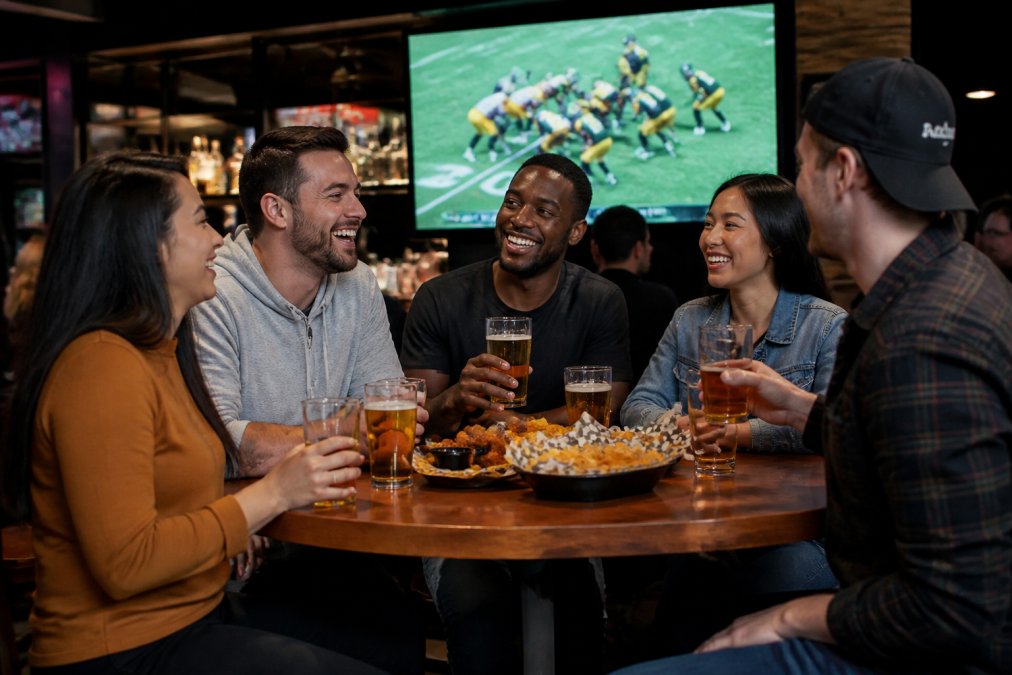
Here's your group event planning checklist:
- Confirm attendance. Ask everyone to RSVP by a specific date. You need solid numbers for reservations.
- Pick a venue. Choose a place that handles groups well. Check reviews specifically for group experiences.
- Set arrival time. Tell everyone to arrive 15-20 minutes before kickoff. This prevents stragglers from missing the opening.
- Arrange payment. Decide upfront if you're splitting the bill, collecting money, or one person paying. Avoid surprises at checkout.
- Share the address and parking details. Send everyone a map link and parking instructions. Confusion on arrival day wastes time.
- Create a group chat. Use text or email to send updates. Keep everyone informed about any changes.
Managing Digital Tickets and Seat Assignments
- Designate one person as the ticket buyer. This person purchases all tickets at once in a single transaction. Buying separately often splits your group across different sections or rows.
- Use the venue's interactive seating map within the ticketing app. Before you buy, zoom in on your target section and verify that adjacent or nearby seats are available. Most apps show seat numbers and exact locations.
- Understand transfer windows. Most stadiums allow ticket transfers via their app, but some restrict transfers until a certain date before the game. Check the venue's transfer policy before buying. If transfers are blocked until 48 hours before game day, communicate this to your group so they know when they'll receive their digital ticket.
- Transfer tickets to individual group members' accounts. Once you've bought, use the app to send tickets to each person's email or phone number. They'll receive a digital ticket they can display on their phone at entry. This prevents the chaos of one person holding all tickets.
- Verify seat locations after transfer. Have each person confirm in the app that they received the correct ticket and can see their seat number. A quick check prevents someone showing up with the wrong ticket.
- Share a screenshot of the seating chart. In your group chat, post a screenshot showing where everyone is sitting. This helps people find each other before the game and confirms no one got separated.
Pricing and Seat Value Trade-offs
- Upper-deck corners often offer better sightlines than lower-bowl corners, even though they cost less. Check the interactive map to compare angles.
- Endzone seats are cheaper but offer a skewed view. If you're watching a sport where the action moves along the sideline (football, soccer), sideline seats justify the premium.
- Mid-row seats often cost less than aisle seats, even though the view is identical. If bathroom access isn't critical, save money by sitting mid-row.
- Dynamic pricing means prices change hourly. If the game isn't sold out, prices often drop in the days before the event (Understanding Ticketing: How Platforms Like StubHub Work). If your group is flexible on timing, waiting to buy can save 20-40% per ticket.
How to Host Fantasy Football Draft Nights With Guaranteed Seating
Fantasy football drafts demand specific seating arrangements. Everyone needs a clear view of the draft board or screen, access to their phone or laptop, and enough table space for notes and drinks. A cramped booth won't work; you need a dedicated area with proper furniture placement.
- One large table or grouped seating, Avoid scattered chairs that separate your group
- Multiple screens visible, Everyone should see the draft board without turning their head
- Outlet access, People need to charge phones and laptops
- Food and drink service, Confirm the kitchen can handle group orders without long delays
- Minimal noise distractions, Ask for a quieter section away from the main bar if possible
Arrival Timing and Venue Entry Logistics
Timing determines whether your group has a smooth entry or a stressful scramble. Arriving too early wastes time; arriving too late means chaos. For stadium events, plan to arrive 60-90 minutes before kickoff. For sports bars, 15-20 minutes before the game starts is ideal.
Here's the arrival logistics breakdown:
- Parking, Arrive early enough to find a spot without rushing. Stadium parking fills up fast.
- Entry gates, Have your tickets ready. Lines move slowly when people fumble for tickets.
- Security screening, Allow time for bag checks and metal detectors, especially at stadiums.
- Finding your seats, Arrive with enough buffer time to locate your section without missing the opening.
- Settling in, Get to your seat, grab drinks and food, and settle before the game starts.
Optimizing Comfort and Line of Sight for Game Day
Game day comfort comes down to three things: your seat quality, the viewing angle, and how long you'll be sitting. A four-hour game feels different in a stadium seat versus a bar stool.
Focus on these comfort factors:
- Seat type, Stadium seats are narrow; bring a cushion. Bar seating is better but still requires breaks.
- Viewing angle, Sit at a 90-degree angle to the screen if possible. Sitting too far to the side strains your neck.
- Legroom, Avoid seats where your knees hit the back of the seat in front of you.
- Temperature, Stadiums get cold at night; bring a jacket. Sports bars control climate better.
- Bathroom access, Choose seats near an aisle or concourse. You'll need to get up multiple times.
Frequently Asked Questions
How far in advance should I reserve game day seating for a large group?
For groups of 15 or more, call ahead at least 3-7 days before the game, especially for major events like playoff games or rivalry matchups. Smaller groups of 8-10 can often secure seating with 2-3 days' notice. Venues like Crowne Sports Bar & Grill hold group reservations to guarantee your party sits together, but availability tightens as game day approaches. Confirm your group size, preferred section, and any special requests when booking.
What questions should I ask when calling to reserve game day seating?
Ask about the number of screens visible from your reserved area, the proximity to speakers and restrooms, table capacity and layout options, whether food orders can be placed in advance, and if there's a minimum spend requirement. Inquire about their group event planning policies, cancellation deadlines, and whether they can accommodate late arrivals. Clarify kickoff time and when your reservation window closes, most venues release reserved seating 15-30 minutes before game start.
Can I guarantee my group sits together on game day without a reservation?
Walk-ins risk being split across tables or standing room only during high-demand games. Making a reservation is the only reliable way to ensure your entire group stays together. Sports bar reservation tips include calling directly rather than relying on online booking, confirming seating proximity, and arriving 15-20 minutes before your reserved time to lock in your spot. Without a reservation, arrive 1-2 hours early for major games.
What's the best arrival time to guarantee good seating on game day?
For reserved groups, arrive 15-20 minutes before kickoff. For walk-ins, come 1-2 hours early on regular games and 2-3 hours early for playoff games or rivalry matchups. Arriving early also gives you time to review the venue layout, identify which screens have the best line of sight from your seating area, and place food and drink orders before the crowd peaks. Check the stadium section and general public capacity to gauge how busy the venue will be.