 ultimate-guide
How to Host a Fantasy Football Draft: 2026 Guide
Table of Contents
- Decide Where to Host Your Fantasy Football Draft
- Set Up Your Draft Board and Essential Supplies
- Choose the Best Fantasy Football Draft Board Software
- How Long Does a Fantasy Football Draft Take?
- Plan Food, Drinks, and Draft Day Atmosphere
- Manage the Draft Clock and Keep the Pace Moving
- Your Fantasy Football Draft Party Checklist
- Handle Hybrid Drafts and Conflict Resolution
- Frequently Asked Questions
Last Updated: September 5, 2026
Hosting a fantasy football draft is equal parts logistics and showmanship. Treat the event like a small production: you need a clear venue plan, the right equipment, a firm schedule, and a way to keep everyone engaged. At Crowne Sports Bar & Grill, we understand what works for draft parties.
Decide Where to Host Your Fantasy Football Draft
The venue sets the ceiling for how good your draft day will be. A successful draft needs enough space for your league members, a clear view of the draft board, and a noise level that lets everyone hear the commissioner call out picks. The two most reliable options are a private home or a sports bar with a dedicated area.
Hosting at Home
Hosting at home gives you total control over the environment, Wi-Fi, temperature, food, and the draft order reveal. The main burden falls on the host: setup, food, drinks, and cleanup can distract you from managing your own team. For a standard 10 or 12-team league, you need a table large enough for everyone plus a wall or easel for the draft board.
Hosting at a Sports Bar or Restaurant
A sports bar removes the setup burden and adds atmosphere, but offers less control over noise and space. Before booking, call ahead to confirm they can accommodate your group size and ask about reserving a section with a clear view of the screens. Crowne Sports Bar & Grill offers big screens throughout and a menu built for groups, keeping everyone fed without pausing the draft.
Set Up Your Draft Board and Essential Supplies
Once the venue is locked in, gather the physical tools that keep the draft moving: a large printed draft board, color-coded stickers or labels for each position, and markers. A common mistake is underestimating wall space; a 12-team board with 16 rounds requires a substantial surface.
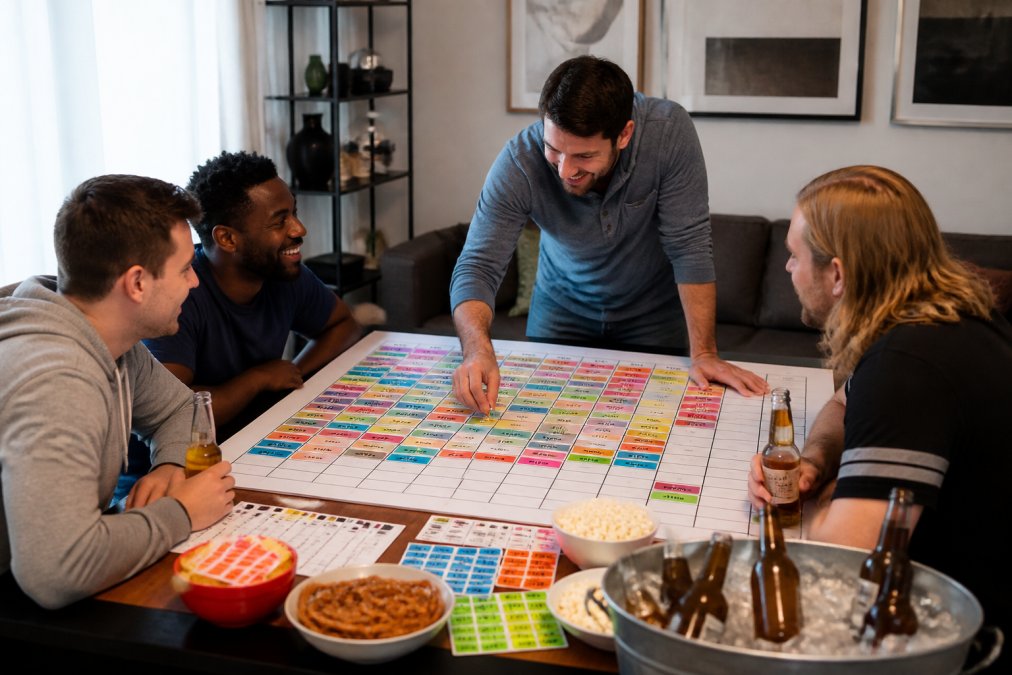
You will also need a reliable timer, a notepad for the commissioner to track trades, and a printed copy of the official scoring rules. If using a physical board, assign one person to be the "board operator" so the commissioner can focus on announcing picks and fielding trade offers. This role is critical; the draft falls apart when one person tries to do both.
Choose the Best Fantasy Football Draft Board Software
Most modern leagues run a hybrid setup with a digital draft board projected on a screen. The best fantasy football draft board software integrates directly with your league platform, allowing automatic pick tracking, player queues, and live draft order updates, the most efficient way to run a snake or auction draft without manual data entry.
Prioritize software with a "commissioner mode" offering pause and override controls to correct mistakes or process mid-draft trades. Many platforms offer free tiers, with paid versions unlocking draft grade reports and auction nomination timers. Always test the software with a mock draft before draft day to ensure everyone can log in and see the board.
How Long Does a Fantasy Football Draft Take?
A standard fantasy football draft takes between two and three hours for a 12-team league with 16 rounds (espn.com). The pace depends heavily on the time limit per pick: a 60-second clock keeps things brisk, while 90 seconds allows more time for trading and deliberation.
| League Size | Rounds | Time Per Pick | Total Duration |
|---|---|---|---|
| 10 teams | 15 | 60 seconds | 1.5 - 2 hours |
| 12 teams | 16 | 60 seconds | 2 - 2.5 hours |
| 12 teams | 16 | 90 seconds | 2.5 - 3 hours |
| 14 teams | 16 | 75 seconds | 2.5 - 3 hours |
The single biggest time killer is an unmanaged clock. Set the limit to 60 seconds and enforce it strictly. For an auction draft, expect to add an extra hour, as nomination and bidding take longer than a snake draft. A draft running past three hours loses momentum, so plan your start time accordingly.
Plan Food, Drinks, and Draft Day Atmosphere
Food and drinks fuel the draft room, but the standard advice, wings, sliders, nachos, ignores two realities: wildly different budgets and dietary restrictions. Build a plan around a per-person budget that matches your league dues.
The $50 Draft (Budget Tier)
For a 12-team league with a $50 total food budget, aim for maximum calories per dollar with zero prep time. The most reliable play is a slow cooker: two 3-pound bags of frozen meatballs with a 28-ounce jar of grape jelly and a 28-ounce bottle of barbecue sauce costs roughly $25 and feeds the room for three hours. Add two bags of slider buns ($6), a 5-pound bag of tortilla chips ($5), and three jars of salsa or queso ($9). Total: about $45, leaving $5 for soda. This menu requires one outlet, one slow cooker, and zero silverware.
The $250 Draft (Premium Tier)
For leagues with higher dues, the premium tier shifts from survival food to experience. Order party trays from a local sports bar or deli, 50 wings, a full sheet of pizza, or a cold-cut platter typically runs $120 to $180 for 12 people. The remaining budget goes to drinks: two cases of domestic beer ($40) and a 24-pack of water bottles ($8). The key is timing food arrival to the draft start, not the middle. If your draft starts at 7 PM, schedule delivery for 6:45 PM so members eat during the first two rounds, not when trades heat up.
Dietary Restrictions and Accessibility
A standard menu of wings and pizza excludes vegetarian, vegan, gluten-free, or nut-allergic members. Send a one-question poll via your league's group chat one week before the draft: "Any dietary restrictions or allergies?" If even one member responds, adjust the menu. A no-prep vegetarian option is a large veggie tray with hummus ($12) or a cheese pizza alongside the pepperoni. For gluten-free members, verify wings are not tossed in a flour-based sauce, most buffalo sauces are gluten-free, but ask the restaurant (celiac.org). For nut allergies, avoid snack mixes and desserts containing peanuts or tree nuts, and check labels on packaged items.
Atmosphere That Supports Function
The draft day atmosphere is about communication, not decoration. Background music at low volume fills awkward silence, but keep it low enough that the commissioner can be heard. Use the "phone test": stand at the far end of the draft table and ask a friend to speak at a normal volume. If you cannot hear them over the music, turn it down. At a venue, confirm you can control the volume in your section. For late-night drafts starting at 8 PM, verify the kitchen is still serving full menu items, not just bar snacks.
Physical Accessibility
Accessibility also means physical access. If a league member uses a wheelchair or has limited mobility, confirm the draft location has a step-free entrance and at least one seat with adequate leg clearance (ada.gov). At home, move the draft table to the ground floor if your usual space is upstairs. At a bar or restaurant, ask whether the reserved section is on the ground level. These details are rarely in the booking confirmation, so a quick call one week before resolves them.
Manage the Draft Clock and Keep the Pace Moving
The commissioner's primary job on draft day is to manage the pace. Set draft clock expectations before the first pick and enforce them consistently. If using a digital platform, the software handles the countdown, but the commissioner must be ready to pause for legitimate trade discussions or technical issues.
A common mistake is letting the clock slide "just this once" for a friend deciding between two players, this sets a precedent that slows the entire draft. Encourage members to queue up their next three to five players so they are never scrambling. If someone lets the clock run out, the system should auto-pick from their queue, keeping the draft moving and punishing lack of preparation.
Your Fantasy Football Draft Party Checklist
Use this checklist to ensure nothing falls through the cracks on draft day. Work through it the night before so you are not running errands during the first round.
- Confirm venue reservation and group size with the venue
- Send draft date, time, and location to all league members
- Confirm draft order and scoring settings in the league platform
- Test the draft software and ensure all members have login access
- Prepare or order food for the expected draft duration
- Stock drinks, ice, and disposable plates and napkins
- Set up the draft board (physical or digital projection)
- Assign roles: commissioner, board operator, and food runner
- Print a copy of the rules and scoring settings
- Prepare a backup draft board in case of Wi-Fi failure
Handle Hybrid Drafts and Conflict Resolution
The modern draft is rarely fully in-person. Hybrid drafts, where some members join remotely, require extra planning to keep everyone on equal footing. This is the most common setup for leagues with members who have moved cities or have conflicting schedules. The commissioner's job is to create a single source of truth that both in-person and remote members can see and trust.
The Three-Screen Setup
The most reliable hybrid setup uses three screens. Screen one is the primary draft board, a digital platform like Sleeper, ESPN, or Yahoo, or a physical board with a dedicated camera. Screen two is the video call (Zoom, Google Meet, or FaceTime) showing remote members' faces, positioned so in-person members can read body language during trades. Screen three is a dedicated laptop or tablet for remote members to view the draft board in real time, placed next to the video call screen so they can see both the board and the room.
For remote members, the single most important piece of equipment is a stable wired internet connection, Wi-Fi can drop during peak evening hours. If a remote member has unreliable internet, the commissioner should have a phone number and a backup plan: the remote member texts their top three ranked players before the draft, and the commissioner auto-picks from that list if the connection fails.
The Camera Angle Problem
If using a physical draft board, the camera angle is the difference between a functional hybrid draft and a frustrating one. A laptop camera at table height captures the backs of heads, not the board. The fix is a cheap phone tripod ($15 to $20) at a 45-degree angle above the board, or a stack of books elevating the laptop to eye level. Test the angle the night before: have one person stand at the far end of the table and read a player name while a remote member confirms they can see the sticker clearly.
Conflict Resolution Protocol
Conflict resolution is the part of hosting no one plans for until it happens. The most common disputes involve a pick announced but not recorded, or a trade accepted seconds before the next pick. The commissioner must rule quickly and move on. Establish a clear rule before the draft: the pick is official when the commissioner announces it, not when the software updates. This prevents timing arguments and keeps the draft moving.
The Three Most Common Disputes and How to Rule on Them
Dispute 1: The Unrecorded Pick. A member announces a player, the commissioner is distracted, and the software auto-picks someone else. The rule: if the commissioner heard the announcement and can confirm it, the announced player stands, and the auto-picked player is returned to the pool. If no one heard the announcement, the auto-pick stands. This rule rewards clear communication and punishes mumbling.
Dispute 2: The Late Trade Acceptance. A member accepts a trade offer seconds after the next pick has been announced. The rule: trades are official only when both parties confirm in the league chat or verbally to the commissioner, and the confirmation must happen before the next pick is announced. If the confirmation comes after the announcement, the trade processes after the current pick. This prevents the chaos of a trade that reshuffles draft order mid-pick.
Dispute 3: The Player Eligibility Argument. A member drafts a player who is suspended, injured, or ineligible, and another member claims the pick should be void. The rule: all players are draftable unless the league platform marks them as ineligible. The commissioner does not need to track injury reports or suspensions; the platform does that. If a member drafts a suspended player, that is their risk, and the pick stands. This rule keeps the commissioner neutral and avoids the impossible task of monitoring every team's news feed.
The Commissioner's Ruling Framework
When a dispute arises, use a three-step framework. First, state the rule that applies, if no rule exists, state that the commissioner is making a judgment call. Second, make the ruling immediately, even if unpopular. Third, offer to revisit it after the draft if the league votes to change it, but the pick stands for now. This prevents the draft from stalling while allowing post-draft correction.
Frequently Asked Questions
What is the ideal venue for a fantasy football draft?
The best venue depends on your league's size and budget. Hosting at home offers control over the draft board and atmosphere, ideal for a more focused, traditional draft. For larger groups or those who want a more festive vibe, a sports bar or restaurant is an excellent option. These venues provide big screens, food and drink service, and often have private areas for parties. Consider factors like space, noise level, and access to reliable Wi-Fi when making your decision.
How long does a fantasy football draft take?
A standard 12-team, 16-round snake draft typically takes about two to three hours. The duration depends on the draft clock setting, which is usually 60 to 90 seconds per pick. Auction drafts can take longer, often three to four hours, because of the bidding process. To keep things moving, set a clear time limit for each pick and have the commissioner enforce it. Using draft software with an automated clock can also help ensure the draft finishes in a timely manner.
What are the essential supplies for a draft party?
The essential supplies for a successful draft party include a draft board or access to draft software, a reliable internet connection, and a screen to display the draft if using digital tools. You will also need a way to track picks, such as stickers for a physical board or a laptop for an online one. Don't forget the basics: pens and paper for mock drafts, comfortable seating for all league members, and a power strip for charging devices.
What is the commissioner's role during a live draft?
The commissioner is the referee and organizer of the draft. Their main duties include setting up the league and draft order, managing the draft clock, and enforcing the rules. They are responsible for resolving any disputes or technical issues that may arise. During a live draft, the commissioner should also coordinate the flow, announce each pick, and ensure all team owners are present and ready when their turn approaches. A good commissioner keeps the draft moving and ensures a fair and enjoyable experience for everyone.
Frequently Asked Questions
Q: What is the ideal venue for a fantasy football draft?
A: The best venue depends on your league's size and budget. Hosting at home offers control over the draft board and atmosphere, ideal for a more focused, traditional draft. For larger groups or those who want a more festive vibe, a sports bar or restaurant is an excellent option. These venues provide big screens, food and drink service, and often have private areas for parties. Consider factors like space, noise level, and access to reliable Wi-Fi when making your decision.
Q: How long does a fantasy football draft take?
A: A standard 12-team, 16-round snake draft typically takes about two to three hours. The duration depends on the draft clock setting, which is usually 60 to 90 seconds per pick. Auction drafts can take longer, often three to four hours, because of the bidding process. To keep things moving, set a clear time limit for each pick and have the commissioner enforce it. Using draft software with an automated clock can also help ensure the draft finishes in a timely manner.
Q: What are the essential supplies for a draft party?
A: The essential supplies for a successful draft party include a draft board or access to draft software, a reliable internet connection, and a screen to display the draft if using digital tools. You will also need a way to track picks, such as stickers for a physical board or a laptop for an online one. Don't forget the basics: pens and paper for mock drafts, comfortable seating for all league members, and a power strip for charging devices.
Q: What is the commissioner's role during a live draft?
A: The commissioner is the referee and organizer of the draft. Their main duties include setting up the league and draft order, managing the draft clock, and enforcing the rules. They are responsible for resolving any disputes or technical issues that may arise. During a live draft, the commissioner should also coordinate the flow, announce each pick, and ensure all team owners are present and ready when their turn approaches. A good commissioner keeps the draft moving and ensures a fair and enjoyable experience for everyone.