 ultimate-guide
Sports Bar Food Quality Checklist: 7 Standards
Table of Contents
- Why Sports Bar Food Quality Standards Matter
- Kitchen Sanitation and Food Safety Checklist
- Evaluating Sports Bar Wings Quality
- Assessing Sports Bar Burgers for Quality
- Inventory Control and Vendor Consistency
- Quality Control During Peak Hours and Late-Night Service
- Staff Training and Food Handling Certification
- How to Review Sports Bar Food Quality
- Frequently Asked Questions
Last Updated: October 15, 2026
Why Sports Bar Food Quality Standards Matter
At Crowne Sports Bar & Grill, we understand that consistency separates a destination venue from a forgettable night out. When fans gather to watch their team, they're not just there for the screens, they're there for the experience, and that experience hinges on food quality.
The challenge intensifies during high-volume periods. Game days and late-night service demand speed without sacrificing the sensory quality metrics that keep customers returning. This is where a structured sports bar food quality checklist becomes essential.
Kitchen Sanitation and Food Safety Checklist
Food safety and sanitation standards form the foundation of every quality operation. Without them, no amount of culinary skill matters. The difference between a sports bar that thrives and one that faces health department citations comes down to disciplined daily execution.
Daily sanitation tasks
Start each shift with a complete walkthrough of your kitchen. Surfaces should be wiped down with approved sanitizer, cutting boards separated by protein type, and equipment cleaned according to manufacturer specifications.
Document your daily sanitation in writing. A simple checklist, sanitizer bucket concentration verified, drain areas cleared, cold storage temperature confirmed, protects your operation. Cross-contamination prevention means raw proteins never touch ready-to-eat items (the CDC). Designate separate cutting boards for poultry, beef, and vegetables. This isn't optional during peak hour throughput when multiple prep stations run simultaneously.
Temperature logs and cross-contamination prevention
Temperature logs are your legal and operational insurance. Cold storage should maintain 41°F or below; hot-holding equipment should reach 165°F minimum. Check these twice daily, once during opening prep and once mid-shift.
Record temperatures on a visible log. When a unit drifts, you have documentation that you caught it and took corrective action. This matters during health inspections and when training new staff on standard operating procedures.
Evaluating Sports Bar Wings Quality
Wings are a signature item at many sports bars. They're also where quality inconsistency becomes immediately obvious to customers. A wing that's perfectly executed one night but dry or under-sauced the next erodes trust faster than almost any other menu failure.
Texture, flavor, and freshness indicators
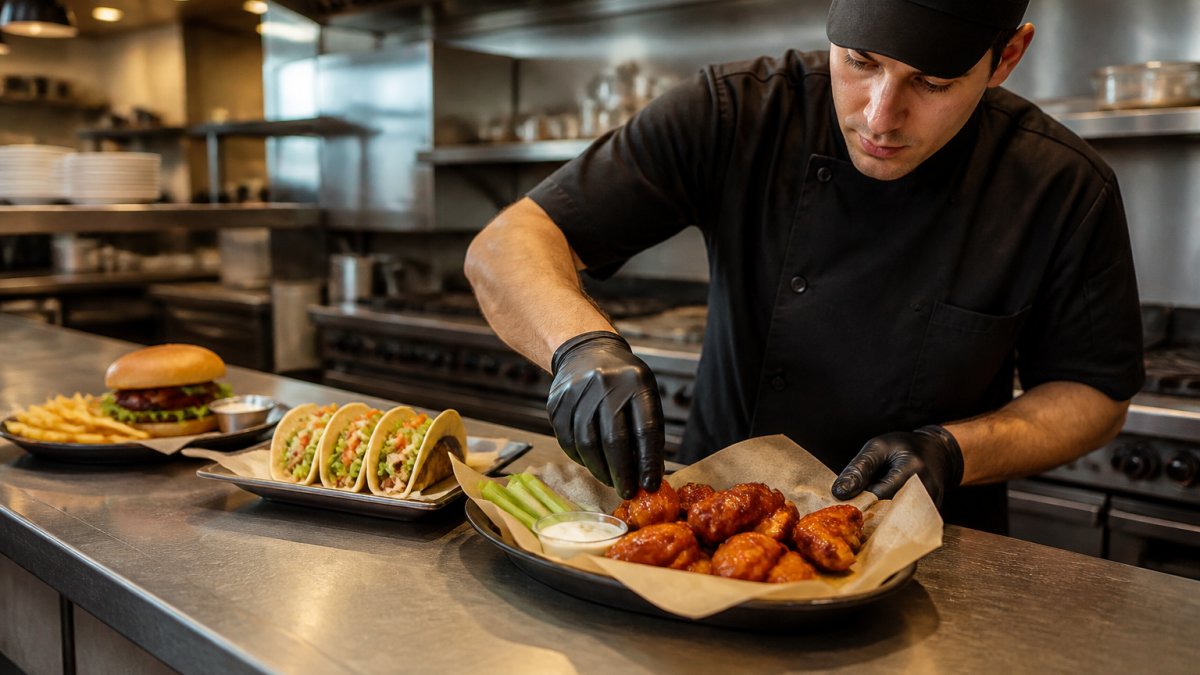
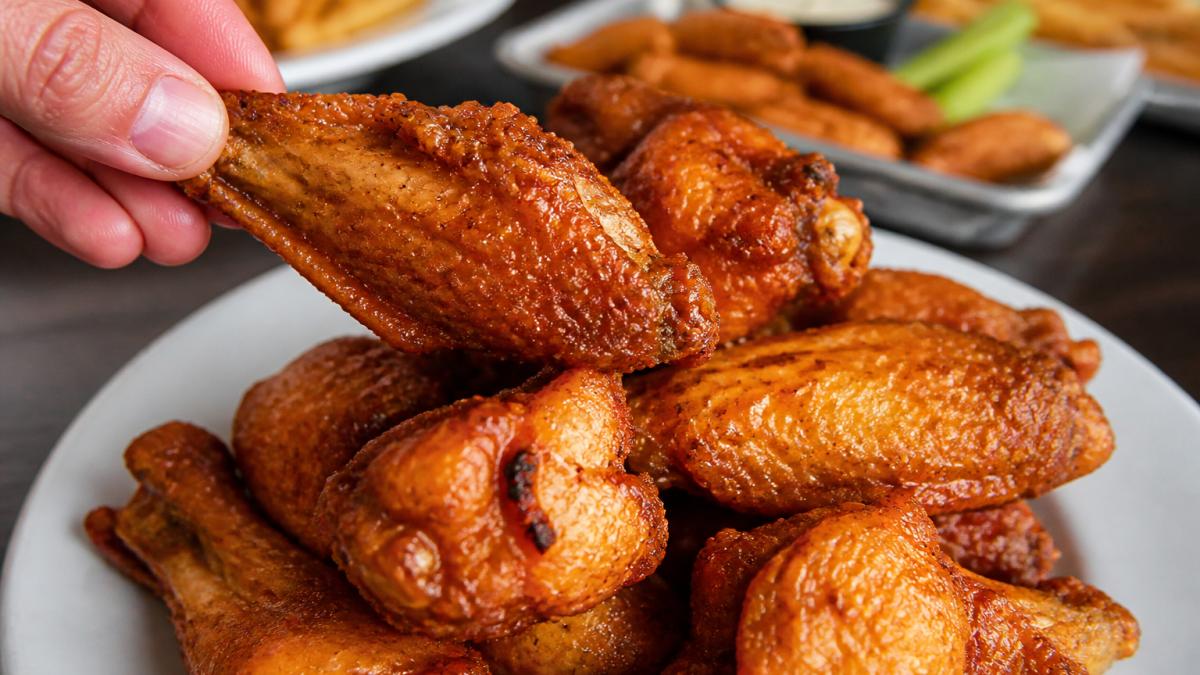
Quality wings should have a crispy exterior with meat that pulls cleanly from the bone, not rubbery, not falling apart. The skin should be golden and firm, not soggy or pale.
Sauce consistency matters as much as the wing itself. It should coat evenly without pooling at the bottom of the basket or sliding off.
Sauce consistency and coating standards
Standardized recipes are non-negotiable for wings. Document exact sauce ratios: if your buffalo sauce is two parts Frank's RedHot to one part butter, that ratio stays consistent batch to batch. Measure ingredients by weight, not eyeballing. A kitchen scale prevents the "this batch tastes different" complaints that damage reputation.
Coating should be even across all wings in an order. Shake the basket thoroughly after frying to remove excess oil, then toss with sauce in a clean bowl. Wings sitting in sauce for more than a few minutes before service become soggy.
Assessing Sports Bar Burgers for Quality
Burgers demand precision that many sports bars neglect. A burger is simple, meat, bun, toppings, which means there's nowhere to hide when any component falters.
Meat quality, doneness, and plate presentation
Higher fat content keeps the burger juicy; leaner meat can produce a dry puck. Source beef from vendors who maintain ingredient sourcing standards and can verify freshness. Patties should be formed gently, overworking the meat creates a dense, tough texture. A patty should weigh consistently before cooking.
Doneness consistency is where many operations fail during peak hours. Medium rare is a standard for food safety while maintaining juiciness. Invest in instant-read thermometers and use them. No guessing.
Ingredient freshness and bun standards
Lettuce should be crisp, tomatoes ripe and firm (not mealy), and cheese melted properly, which means placing it on the hot patty immediately after cooking so residual heat does the work. Buns should be toasted lightly on the griddle, not steamed or left cold.
Shelf-life monitoring for produce is critical. Tomatoes past peak ripeness become mushy. Establish a first-in-first-out system for all perishable goods tracking. Date everything when it arrives, and rotate stock so older items are used first. This prevents waste and ensures every burger gets fresh ingredients.
Inventory Control and Vendor Consistency
Vendor relationship management directly impacts your food quality assurance. You can't maintain consistency with unreliable suppliers delivering inconsistent products.
Perishable goods tracking and shelf-life monitoring
Implement an inventory audit system that tracks not just quantity but freshness dates. A spreadsheet updated daily takes five minutes and prevents the scenario where you discover three-week-old chicken thighs mid-service. For wings and burgers specifically, track receiving dates, expiration dates, and usage patterns.
Cold storage rotation is mechanical but essential. Place new stock behind existing inventory. Train staff to check dates before grabbing items. During inventory audits, flag anything approaching expiration and plan menu features around it rather than letting it expire unused.
Vendor relationship management and ingredient sourcing
Meet with your primary vendors quarterly. Discuss quality standards, pricing stability, and backup suppliers. Contingency planning prevents the scramble when your usual vendor runs out mid-week.
Establish written specifications with vendors. If you order chicken wings, specifying size range, packaging, and acceptable defect rate can help ensure consistency. Clear specifications also protect your vendor, they know exactly what you expect.
Quality Control During Peak Hours and Late-Night Service
Peak hour throughput and late-night service create the conditions where quality fails. Speed pressures mount, staff fatigue sets in, and corners get cut. This is where your systems either hold or collapse.
Speed-of-service vs. quality trade-offs
The real challenge isn't speed or quality, it's maintaining both simultaneously. This requires pre-planning. Before a game day or Friday night, prep what you can: portion control items pre-measured, sauces made fresh but ready to deploy, buns toasted in batches.
Late-night service often sees the worst quality because fewer staff are working and fatigue is highest. Counter this by running smaller menu selections during late hours, focus on your best items rather than trying to execute your full menu at 2 AM with a skeleton crew.
Peak hour throughput and portion control
Portion control prevents both waste and inconsistency. Use scales for burger patties, measuring spoons for sauce, and portion cups for sides. When orders are flying, standardized portions ensure every customer gets the same amount of product. This also controls food cost percentage, if portions drift upward, your margins disappear.
Throughput tracking means monitoring how long orders spend in the kitchen. If burgers are taking too long from order to plate during peak hours, that's a bottleneck. Is it the grill, the assembly station, or the fryer?
Staff Training and Food Handling Certification
Your operation's quality ceiling is determined by your staff's knowledge and discipline. Even the best systems fail with untrained employees cutting corners.
Food handling certification through an accredited program should be mandatory for every kitchen staff member.
Beyond certification, ongoing training is essential. New hires should shadow experienced staff for at least one service before working independently.
Incentivize quality. Review what went wrong, was the timing off? Did they sit under heat lamps too long? Did the sauce ratio drift?
How to Review Sports Bar Food Quality
Whether you're evaluating your own operation or considering where to spend your game-day dollars, the same metrics apply.
Sensory quality metrics and customer satisfaction signals
Taste every item you serve or order. Note the temperature, texture, and flavor profile. Is the wing crispy or soggy? Is the burger juicy or dry? Does the sauce taste fresh or stale? These sensory quality metrics are subjective but consistent, if three different people taste the same item and report different experiences, you have a consistency problem.
Customer satisfaction signals include repeat orders, social media mentions, and word-of-mouth. Customers who return weekly are voting with their wallets. Pay attention to what they order repeatedly and what they skip.
What to look for in consistency and presentation
Consistency means the same item tastes the same way every time you order it. Presentation means the plate looks intentional, garnished thoughtfully, components arranged logically, not haphazard.
During peak hours, consistency often deteriorates. Order the same item during a quiet Tuesday and a busy Saturday. If there's a noticeable quality difference, that's a red flag. The best operations maintain standards regardless of volume.
Quality in a sports bar isn't luxury, it's the baseline expectation.
Frequently Asked Questions
What should a sports bar food quality checklist include?
A comprehensive sports bar food quality checklist covers kitchen sanitation standards, temperature logs, inventory audits, vendor consistency verification, portion control procedures, staff food handling certification, and peak-hour quality control protocols. Include daily sanitation tasks, cross-contamination prevention steps, perishable goods tracking, and sensory quality metrics for signature items like wings and burgers. Standard operating procedures should document preparation timing, plate presentation standards, and how to maintain quality during high-volume service periods.
How can you tell if sports bar wings are fresh and well cooked?
Fresh, well-cooked wings should have a crispy exterior with a golden-brown color and juicy meat inside. The meat should pull cleanly from the bone without resistance. Check that sauce coats evenly without pooling excessively at the bottom of the plate. Smell for any off-odors; fresh wings have a neutral or slightly savory aroma. Avoid wings that appear greasy, have pale or burnt spots, or show signs of drying out. Temperature should reach 165°F internally to ensure food safety.
What should you look for in a sports bar burger?
Quality sports bar burgers start with fresh ground beef that shows consistent color without gray or brown patches. The patty should be cooked to the ordered temperature without a hard crust or dry interior. Buns should be lightly toasted, not soggy or stale. Toppings including lettuce, tomato, and cheese should be fresh and cold. Plate presentation matters: burgers should be assembled neatly, not haphazardly stacked. The burger should hold together when picked up without falling apart, indicating proper meat-to-binder ratio and careful construction.
How do you evaluate food safety at a bar or restaurant?
Evaluate food safety by checking for clean kitchen surfaces, proper hand-washing stations, and staff wearing food handling certifications. Verify that cold foods stay below 41°F and hot foods above 135°F using temperature logs. Look for organized storage that prevents cross-contamination, with raw proteins stored below ready-to-eat items. Check expiration dates on ingredients and verify that perishable goods are tracked with shelf-life monitoring. Health department compliance records should be posted and current. Ask staff about their food handling procedures to gauge training quality.
What makes a great sports bar food experience?
A great sports bar food experience combines consistent quality with reliable service speed. Wings and burgers should taste the same whether you order on a quiet Tuesday or during a packed NFL playoff game. Menu items should arrive hot and properly plated, not rushed or cold. Staff should be knowledgeable about ingredients and able to accommodate special requests. The atmosphere should support the sports-watching experience with clear screen visibility and controlled audio. Delivery orders should arrive fresh and properly packaged, maintaining quality during transit.
Why does supply chain contingency planning matter for sports bars?
Supply chain contingency planning ensures that sports bars can maintain food quality during vendor delays, ingredient shortages, or unexpected disruptions. Having backup suppliers for critical items like chicken wings and ground beef prevents menu limitations or quality compromises during peak demand periods like game days. Documented procedures for ingredient substitution and alternative preparation methods protect against service interruptions. This is especially important for late-night service windows when backup options may be limited, ensuring customers receive consistent quality regardless of external supply pressures.