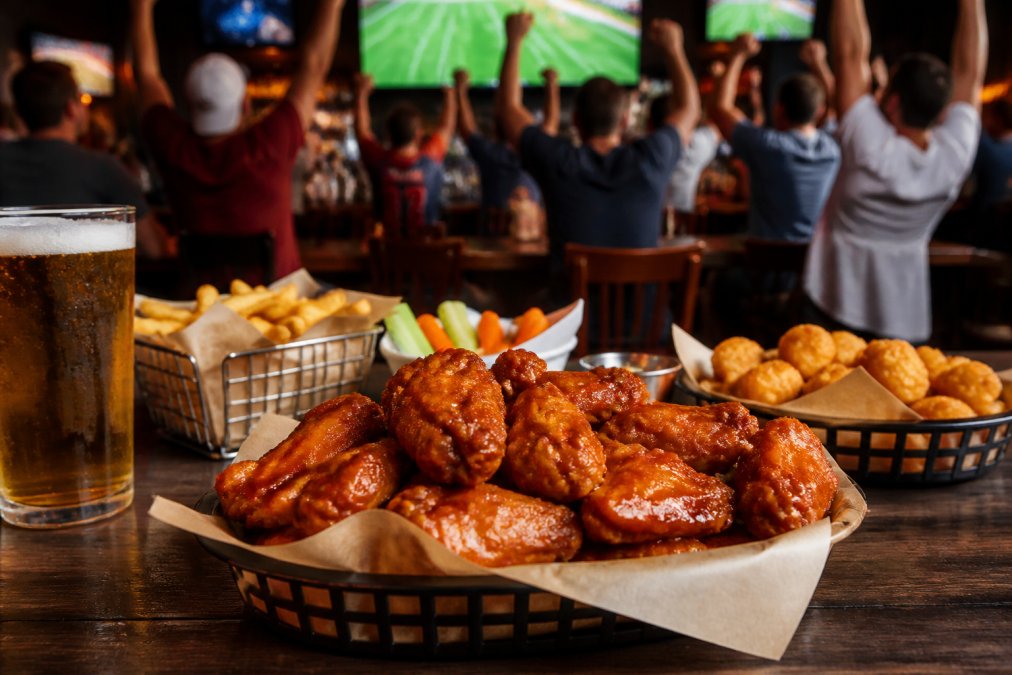
 comparison
Buffalo Wild Wings Alternative for Sports Fans in 2026
Table of Contents
- Why Sports Fans Are Seeking a Buffalo Wild Wings Alternative for Sports
- What Makes the Best Sports Bars for Game Day
- Crowne Sports Bar & Grill: A Local Buffalo Wild Wings Alternative for Sports
- Sports Bar Menu Favorites That Keep Fans Coming Back
- How National Chains and Local Sports Bars Compare for Game Day
- Matching the Venue to Your Watch Party Style
- Frequently Asked Questions
Last Updated: September 10, 2026
Why Sports Fans Are Seeking a Buffalo Wild Wings Alternative for Sports
The hunt for a Buffalo Wild Wings alternative for sports starts with one uncomfortable truth: the biggest chain is no longer the only game in town, and for plenty of fans it is not even the best one. National wing chains built their reputation on consistency, a familiar menu, and screens on every wall. What they cannot offer is what local sports fans ask for most: a room that feels like it belongs to them, food from a kitchen that still cares, and hours that stretch past midnight.
This guide from Crowne Sports Bar & Grill breaks down what matters when you pick a game-day spot, how national chains and independent sports bars differ, and how to match a venue to how your group watches football, basketball, and baseball.
What Makes the Best Sports Bars for Game Day
The best sports bars for game day get three things right at once: sightlines, sound, and seating. A bar with twenty screens and no plan for how they are arranged will still leave half the room craning their necks, while a bar with one giant screen and a smart layout can outperform it.
The Nielsen Sports fan engagement research consistently finds that live sports viewing is a social experience first and a visual one second, which is why atmosphere matters as much as picture quality. Crowd energy, comfortable seating, and a staff that understands when to turn up the volume on one game and mute another all shape whether you stay for one quarter or the whole afternoon.
Screen Count, Sightlines, and Audio Control
Screen count is the number fans ask about first, and it is also the most misleading. A wall of televisions means nothing if the audio is a single feed blaring one game while your table wants another. The venues that get this right separate their rooms, dedicate zones to specific games, and let staff control volume by area rather than for the whole building.
When scouting a spot, ask three questions before you commit:
- How many screens are visible from a standard four-top table, not just from the bar?
- Can the volume be adjusted for a specific section, or is it one feed for the entire room?
- Are the biggest games of the week reserved on the main screens, or is it first-come, first-served?
Crowd Density and Noise Levels on Big Game Days
Noise is the trade-off nobody warns you about. A packed room on a playoff night delivers the best energy in the business and the worst conversation (the CDC). If your group wants to talk through the game, a slightly quieter venue with a dedicated section beats a standing-room-only bar every time. Fantasy drafts, birthday parties, and work happy hours need tables and a reasonable decibel level; rivalry games and championship nights are better in a loud, dense room.
Crowne Sports Bar & Grill: A Local Buffalo Wild Wings Alternative for Sports
Crowne Sports Bar & Grill is our top pick for a Buffalo Wild Wings alternative for sports because it pairs big-screen game days with the two things chains struggle to match: late-night kitchen hours and a menu that goes well beyond wings. Located on Jimmy Carter Blvd in Peachtree Corners, it serves wings, burgers, and tacos alongside ice-cold beer, with dining in and delivery available.
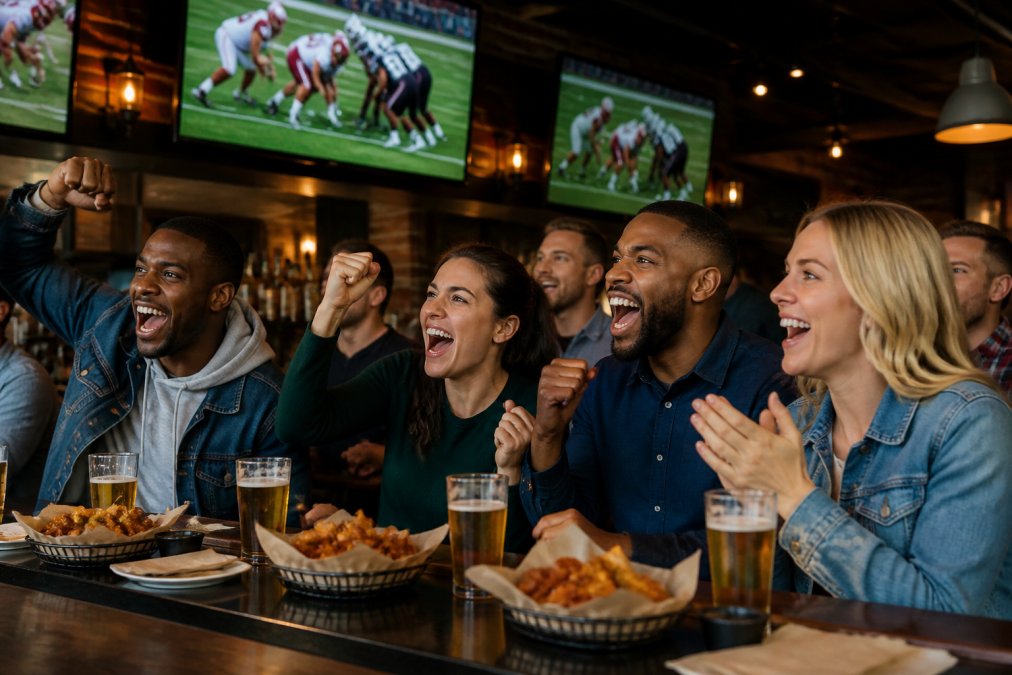
The atmosphere is built for the way people actually watch sports: loud when it should be, comfortable when it needs to be, and welcoming to groups who show up in jerseys and stay through overtime.
Late-Night Kitchen Hours and Delivery Options
Late-night eats are where local sports bars separate themselves from the chains. If you work a late shift and need real food at 2 AM, a full menu matters more than a discount. Crowne keeps the kitchen going late, so orders at that hour are cooked to order.
Delivery extends the same menu to your couch. When the group cannot agree on a meeting spot, ordering in from a sports bar beats a generic burger place, because the food is built for game day: wings with sauce variety, shareable appetizers, and portions sized for a crowd. Check the current menu on the Crowne Sports Bar & Grill site before you build your order.
Sports Bar Menu Favorites That Keep Fans Coming Back
Sports bar menu favorites come down to three categories: wings, shareable appetizers, and something for the people who did not come for wings. The difference between a menu that survives a four-hour watch party and one that collapses by halftime is whether the kitchen can execute each category at volume.
Wings: Sauce Styles, Heat Levels, and the Drums-and-Flats Split
Wing orders are driven by two decisions: sauce style and heat level. Most sports bars group sauces into recognizable families so a table can order fast:
- Buffalo family, classic cayenne-and-butter base, ranging from mild to a habanero or ghost-pepper finish. The default order for most tables.
- Sweet-and-sticky family, honey BBQ, teriyaki, mango habanero, and Korean-style gochujang glazes. These travel better in a delivery box because they do not pool and separate the way thin buffalo sauce can.
- Dry-rub family, lemon pepper, Cajun, garlic parmesan, and Old Bay-style blends. Dry rubs hold their texture longer, which matters if your group orders a 50-piece and grazes through the third quarter.
- Novelty and heat-challenge sauces, the ghost pepper, Carolina reaper, and 'sign a waiver' tier. These sell as a group activity more than a meal.
The drums-and-flats split still starts arguments at every table. Drums outsell flats roughly two-to-one at most bars, which is why venues that let you order all-flats or all-drums charge a small upcharge or cap the all-flats order (peer-reviewed research). If your group has strong preferences, ask before you order 50.
Shareable Appetizers and the Portion Math That Matters
Shareable appetizers keep a group fed through a full game without everyone ordering a full entree. The categories that matter:
- Loaded nachos and cheese fries, the volume play. A full sheet-pan order typically feeds four to six as an appetizer.
- Sliders and mini sandwiches, usually sold in threes or fours, easy to split across a table.
- Wings-adjacent shareables, boneless bites, chicken tenders, and wing dip, which let a table order 'wings' without committing to a bone-in pile.
- Dips and chips, spinach artichoke, queso, and buffalo chicken dip, which hold temperature well and survive a slow first half.
A practical rule: for a group of eight watching a full game, plan on two shareable appetizers per four people plus one wing order per two people, then add entrees only for those who want one. Over-ordering appetizers is the most common way a watch-party tab balloons.
Burgers, Tacos, and the Non-Wing Eaters
Every group of eight has at least one person who does not want wings. Burgers and tacos cover them without forcing the kitchen into a different service line. Look for burgers cooked to order, tacos sold in threes or fours so a table can mix proteins and share, and a burger or taco that is genuinely a meal.
Lighter Options, Dietary Needs, and Beverage Selection
Healthy choices matter more than most bars admit. A group of eight will almost always include someone who wants a salad, a grilled protein, or a lighter appetizer, and a venue that only offers fried food loses that table. The practical checklist:
- At least one entree salad with a protein add-on (grilled chicken, shrimp, or steak).
- At least one grilled or blackened protein that is not breaded.
- A vegetarian option beyond fries and a house salad.
- Gluten-free or bunless substitutions the kitchen will actually honor.
Beverage selection drives the length of the visit as much as the food. Craft beer, domestic drafts, cocktails, and non-alcoholic options all need to be on the list, and the non-alcoholic list matters more than it used to, because designated drivers and non-drinkers often decide where a group goes.
| Menu Category | What to Look For | Why It Matters on Game Day |
|---|---|---|
| Wings | Sauce families (buffalo, sweet-sticky, dry rub), heat tiers, drums-and-flats policy | The core order for most tables; sauce family predicts how well it travels |
| Shareable appetizers | Nachos, sliders, loaded fries, dips | Keeps a group fed through a full game without full entrees |
| Burgers and tacos | Cooked to order, sold in shareable counts | Covers the non-wing eaters in your group |
| Lighter options | Entree salads, grilled proteins, vegetarian and gluten-free swaps | Keeps health-conscious guests at the table |
| Beverages | Draft beer, cocktails, non-alcoholic choices | Drives the length of the visit |
How National Chains and Local Sports Bars Compare for Game Day
National chains and local sports bars win on different things. Chains deliver consistency: the same menu, the same screens, the same experience whether you are traveling or staying close to home. Locals deliver flexibility, character, and the ability to accommodate a request that falls outside a corporate playbook.
But most comparisons stop at menu and hours. The two factors that actually decide whether your group stays for the whole game, crowd and noise level, and the viewing infrastructure behind the screens, are the ones almost nobody breaks down.
Crowd and Noise Level: Match the Room to the Occasion
Noise is the trade-off nobody warns you about. A packed room on a playoff night delivers the best energy in the business and the worst conversation. The fix is not to avoid loud bars, it is to categorize venues by vibe before you pick one, because a family-friendly room and a rowdy room can be the same square footage with a different crowd on a different night.
A practical four-tier framework:
- Family-friendly / early evening, tables, lower volume, kids welcome, games on but not the point. Best for birthday parties, work happy hours, and groups with mixed ages.
- Social / conversational, moderate noise, zoned audio, tables spaced for talking. Best for fantasy drafts, small groups catching a regular-season game, and anyone who wants to hear the person across the table.
- Rowdy / high-energy, standing room, loud single-feed audio, jerseys and chants. Best for rivalry games, playoff nights, and championship watch parties.
- Late-night / post-shift, quieter than the peak crowd, kitchen still open, fewer tables. Best for the 11 PM to 2 AM crowd that wants real food and a screen without the crush.
The same venue can move between tiers across a single day. A local bar that is family-friendly at 6 PM on a Tuesday can be rowdy by 9 PM on a Saturday. Ask the staff which tier a given night usually lands in, that answer beats any online review.
Viewing Infrastructure: Screens, Audio Zoning, and Multi-Game Capability
Screen count is the number fans ask about first, and it is also the most misleading. A wall of televisions means nothing if the audio is a single feed blaring one game while your table wants another. The venues that get this right separate their rooms, dedicate zones to specific games, and let staff control volume by area rather than for the whole building.
What to evaluate before you commit:
- Screen size and sightlines, how many screens are visible from a standard four-top table, not just from the bar. A 75-inch screen you can see beats a 120-inch screen behind a support column.
- Audio zoning, can the volume be adjusted for a specific section, or is it one feed for the entire room? Zoned audio is the single biggest differentiator between a bar you tolerate and a bar you return to.
- Multi-game capability, can the venue show three or four games at once with separate audio zones, or does it default to one 'main' game on the biggest screen? This matters most during the NFL Sunday window, March Madness, and the first two rounds of the NBA and NHL playoffs.
- Game reservation policy, are the biggest games of the week reserved on the main screens, or is it first-come, first-served? Ask whether a group can request a specific game on a specific screen.
- Streaming and out-of-market access, whether the venue carries the packages needed for out-of-market games, which matters if your group follows a team from another region.
Independent bars often invest in zoned audio and multi-game setups because that flexibility is how they compete with chains, while chains standardize on one feed per room for operational simplicity. If your group wants to watch two different games at the same table, the zoning question is the one to ask first.
| Factor | National Chains | Local Sports Bars |
|---|---|---|
| Menu consistency | High, same everywhere | Varies by venue |
| Screen and audio setup | Standardized, often one feed per room | Frequently zoned with per-area audio control |
| Multi-game capability | Limited by standardized layout | Often built for simultaneous games |
| Crowd and noise tier | Predictable, family-oriented | Higher variance, ask about the specific night |
| Late-night kitchen | Frequently limited | Often open much later |
| Group reservations | Rarely flexible | Commonly accommodated |
| Atmosphere | Predictable | Higher variance, more character |
| Delivery and takeout | Widely available | Available at select venues |
Matching the Venue to Your Watch Party Style
The right venue depends on your group, not on the biggest name on the sign. A table of four catching a regular-season NBA game has different needs than twenty people running a fantasy football draft with laptops open.
Use this decision framework before you book:
- Small group, big game: Pick the loudest room with the best sightlines. Energy is the point.
- Group of 10 or more: Prioritize venues that take reservations and can seat you together.
- Late-night crowd: Confirm kitchen hours before you go, not after you arrive.
- Mixed eaters: Choose a menu with wings, burgers, tacos, and lighter options.
- At-home watch party: Order delivery from a sports bar rather than a fast-food chain for better wings and shareable portions.
Picking a game-day spot gets harder every season, and the biggest chain is not automatically the right answer for a group of twenty, a 2 AM craving, or a table that wants wings, tacos, and a salad in the same order. Crowne Sports Bar & Grill was built for exactly those nights, with big-screen game days on Jimmy Carter Blvd, late-night eats that run well past the final whistle, happy hour for the after-work crowd, and delivery when the party stays home. Get started with Crowne Sports Bar & Grill and turn your next watch party into the one your group talks about all season.
Frequently Asked Questions
Are local sports bars better for game day than national chains?
It depends on what you value most. National chains offer consistency and a familiar menu, but local sports bars often provide more flexible screen setups, later kitchen hours, and a crowd that feels like a neighborhood gathering. For fans who want to control the volume in different areas or need food past midnight, a local spot like Crowne Sports Bar & Grill on Jimmy Carter Blvd is often the better fit.
What should I look for in a sports bar menu?
Start with the wings: ask whether they serve drums and flats, what sauce variety is available, and how they handle spiciness levels. A strong sports bar menu favorites list usually includes burgers, tacos, and shareable appetizers alongside a solid beverage selection. If you are ordering takeout or delivery, check that the food travels well and that the kitchen is still cooking full menu items late at night.
How do I find a sports bar with the best wing selection?
Look for a venue that offers both bone-in and boneless options, multiple sauce and dry rub choices, and consistent reviews about flavor and temperature. A dedicated wing-focused spot or a local grill that treats wings as a core menu item usually beats a generalist chain.
What amenities define a top-tier sports bar?
The best sports bars for game day combine several things: enough screens that every seat has a clear view, audio you can actually control or hear over the crowd, comfortable seating for groups of 10 or more, and a kitchen that stays open late. Sports entertainment extras like happy hour specials, and delivery options add value. Crowd density matters too; a venue that gets too packed can ruin the viewing experience even with great food.
Is Buffalo Wild Wings considered a sports bar?
Yes, Buffalo Wild Wings is widely classified as a sports bar chain, with wall-to-wall screens, a wing-heavy menu, and a game-day atmosphere. However, some fans find the experience formulaic and look for a Buffalo Wild Wings alternative for sports that offers a more local feel, later hours, or a different menu. The right choice comes down to whether you prioritize brand consistency or a neighborhood vibe with flexible amenities.