 how-to
What Makes a Good Sports Bar Menu: 7 Essential Elements
Table of Contents
- What Makes a Good Sports Bar Menu Stand Out
- Popular Sports Bar Foods That Drive Sales
- Sports Bar Appetizers and Shareable Plates
- Sports Bar Food and Drink Pairings for Maximum Appeal
- Sports Bar Food Menu Ideas: Balancing Variety With Profitability
- Dietary Needs, Allergen Transparency, and Family-Friendly Options
- Digital Menu Accessibility and Late-Night Service
- Frequently Asked Questions
Last Updated: October 12, 2026
What Makes a Good Sports Bar Menu Stand Out
A good sports bar menu balances what customers crave with what your kitchen can deliver profitably during peak game days.
Three things separate a menu that drives sales from one that just exists: execution consistency, operational speed, and guest experience.
Most sports bars try to be everything to everyone, adding salads, pasta, sandwiches, and seafood.
The winning approach is different: build your sports bar menu around items that deliver speed, consistency, and profit. That means wings, burgers, appetizers, and shareable plates designed for quick prep and high margins.
Popular Sports Bar Foods That Drive Sales
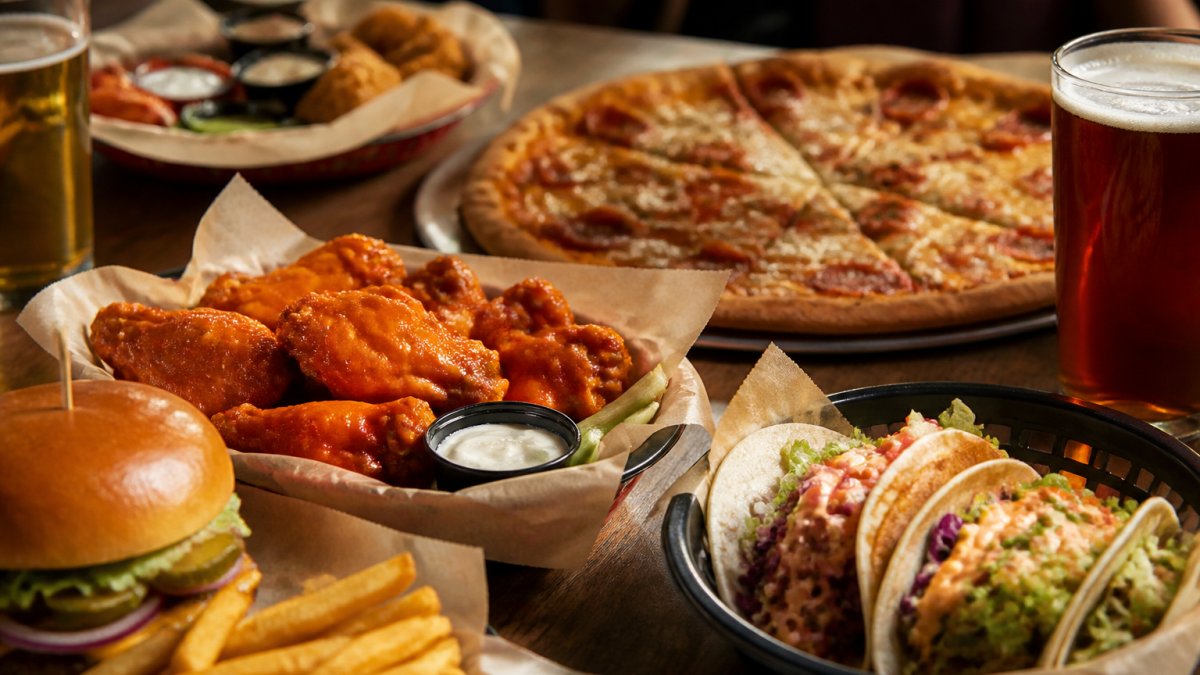
Wings, burgers, sandwiches, and finger foods form the backbone of every successful sports bar menu. These items work because they're fast to prepare, easy to eat while watching, and profitable when priced right.
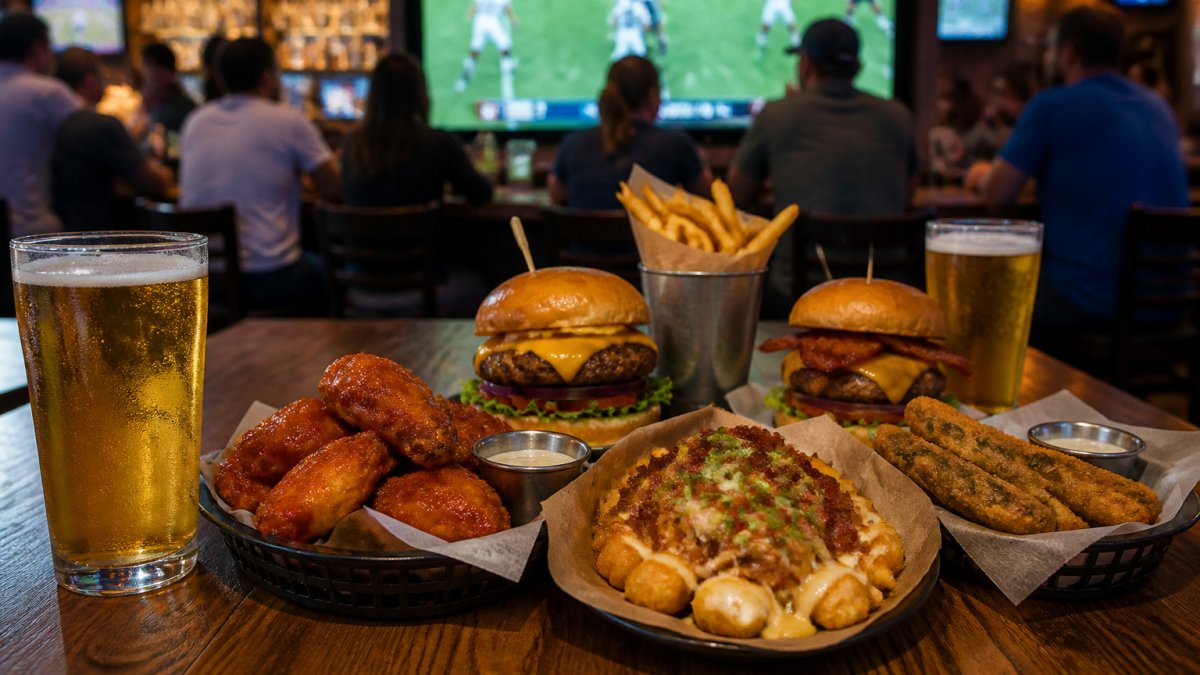
Wings, Burgers, and Game-Day Staples
Wings are iconic, shareable, and expected. What separates a wing order that sells from one that doesn't: sauce variety and portion size.
Offer 4-6 sauce options: classic buffalo, dry rub, teriyaki, garlic parmesan, and something spicy. Let guests mix and match.
Burgers are equally essential. A solid burger menu includes:
- Classic cheeseburger
- Double patty option
- Signature burger with house sauce
- Add-on toppings (bacon, fried egg, caramelized onions, jalapeños)
Consistency is key: same beef blend, cooking temperature, and bun every time. A burger that tastes great on opening day should taste the same six months later.
Sandwiches round out this category: pulled pork, chicken, fish. Keep the count low, three solid options beat ten mediocre ones. During peak service, complexity kills speed.
Customizable Dishes and Add-Ons
Guests love choice without complexity. Build your menu around customizable base dishes.
A taco bar works well: offer proteins (ground beef, shredded chicken, pulled pork) and let guests add toppings. Tacos are fast, fun, shareable, and ideal for late-night service.
Burger and wing add-ons drive incremental revenue: portion upgrades, extra sauce, custom combinations. A guest ordering wings might add ranch or upgrade from 10 pieces to 15, extra margin with minimal prep time.
Create a "build your own" appetizer platter section: wings, fries, mozzarella sticks, nachos, sliders. It raises average order value and feels personalized.
Sports Bar Appetizers and Shareable Plates
Appetizers and shareable plates are where sports bar menus make money.
Focus on finger foods that need no plates or utensils; guests watching games want minimal mess and maximum convenience.
Core appetizers to include:
- Loaded nachos (beef, cheese sauce, jalapeños, sour cream)
- Wings (as noted above)
- Fried cheese (mozzarella sticks, fried pickles, fried mushrooms)
- Sliders or mini burgers
- Chips and dips (salsa, guacamole, queso)
- Pretzel bites with beer cheese
The best shareable plates combine textures and temperatures, warm fried items with cool dips, crunchy next to soft, keeping guests ordering.
Price appetizers to encourage sharing. A $16 loaded nachos plate feeding three feels like better value than a $12 individual appetizer, and higher perceived value means higher order frequency.
Sports Bar Food and Drink Pairings for Maximum Appeal
The best sports bar experiences pair food with drink: cold beer with hot wings, spicy nachos with crisp lagers or wheat beers, burgers with IPAs or lighter lagers.
Train staff to suggest pairings, recommend a complementary beer when a guest orders wings. This drives drink sales and improves the guest experience.
Build your beer selection around approachable options: reliable domestic lagers, a few crafts, lighter beers, plus non-alcoholic choices for designated drivers and late-night workers.
Signature drinks matter too. A house margarita or game-day cocktail creates a reason to visit, keep recipes simple so bartenders execute them quickly during peak service.
Pairings work with appetizers too: fried cheese with cold beer, spicy items with cooler drinks, salty items to encourage drink orders.
Sports Bar Food Menu Ideas: Balancing Variety With Profitability
Every sports bar faces the same tension: guests want variety, but variety kills profitability and speed.
The solution is strategic menu engineering backed by measurement: 12-15 items covering different cravings within your kitchen's capacity, plus a system to prove which items earn their place.
Menu Engineering and Sales Performance
Not all menu items perform equally. Track which sell during peak hours versus slow periods.
Categorize items as stars (high volume, high profit), workhorses (solid volume, solid profit), and niche items (low volume, loyal customers).
Stars deserve prime menu real estate and kitchen prep priority. Workhorses support core business. Niche items add variety but shouldn't distract from revenue drivers.
During game days, focus your kitchen on stars and workhorses. Niche items can wait for slower periods. This keeps ticket times down and quality up.
Measuring Menu Performance After Launch
Most operators launch a menu and never measure it. That's a mistake. You need item-level data to know what's working.
Track these four metrics weekly:
- Item-level sales mix, What percentage of total orders does each item represent? A star should be in your top 20% of items by volume.
- Contribution margin per item, Subtract food cost from selling price. A $12 wings order with $3 food cost contributes $9. A $14 burger with $4 food cost contributes $10. But if the burger takes twice as long to prep, the wings may be more profitable per kitchen minute.
- Waste and spoilage, Track how much of each ingredient you throw away. High waste on a niche item means it's not worth keeping.
- Repeat orders, Use your POS system to see which items guests order again on return visits. High repeat rates signal a keeper.
A common pattern is to review this data monthly and cut the bottom 10% of items by contribution margin. Replace them with a variation of a star item, for example, a new wing sauce or a burger topping, rather than a completely new dish. This keeps prep simple and leverages existing ingredients.
Ingredient Costs and Strategic Pricing
Ingredient costs directly affect profitability. A wings order costs less to produce than a full burger with sides.
Understanding your food costs by item helps you price strategically. Items with lower ingredient costs can support lower margins. High-ingredient-cost items need higher prices to maintain profit.
A common mistake is pricing everything the same way. Your wings might cost $3 to produce but sell for $12.
During peak game days, focus on items with the best margin-to-prep-time ratio. A plate of wings takes five minutes to fry and generates $9 profit.
Operational Feasibility During Peak Games
Your menu is only as good as your ability to execute it during the Super Bowl, playoff games, or championship nights.
Test your menu during actual peak service. Can your kitchen handle 200 orders per hour? Can your staff plate and deliver them in under 15 minutes? If not, simplify.
Pre-prep is critical. Slice vegetables, portion proteins, and prep sauces before service starts. During peak hours, your line cooks should be assembling and cooking, not prepping.
Communicate with your team. During big games, certain items might be slower. Tell guests upfront.
Dietary Needs, Allergen Transparency, and Family-Friendly Options
Modern guests have dietary restrictions. Some avoid gluten. Others are vegetarian or vegan. Some have severe allergies. A menu that addresses these needs opens your business to more customers, but only if you execute without slowing down the kitchen or creating safety risks.
Designing Dietary Options Without Menu Bloat
You don't need elaborate vegan entrées. Simple options work: veggie burger, salad with protein options, or a vegetable-focused appetizer.
The key is to build dietary options from ingredients you already stock. If you serve burgers, a veggie patty uses the same bun, toppings, and grill space.
For gluten-free guests, identify which items are naturally gluten-free, wings without breading, salads without croutons, nachos with corn chips. Mark these on your menu with a symbol.
A common pattern is to offer one vegan entrée, one gluten-free entrée, and one vegetarian appetizer. That covers most dietary needs without overwhelming your line cooks.
Allergen Transparency and Cross-Contamination
Allergen transparency matters legally and ethically. Clearly label items containing nuts, shellfish, dairy, or gluten (the FDA). Train staff to answer allergen questions accurately. If you're unsure whether something contains an allergen, say so. Guessing is dangerous.
But labeling is only half the battle. Cross-contamination in the kitchen is a real risk. If you fry gluten-free items in the same oil as breaded wings, they are not gluten-free. If you use the same cutting board for shellfish and vegetables, you risk a reaction.
A practical approach: keep a laminated allergen matrix in the kitchen. List each menu item and its allergens (dairy, eggs, fish, shellfish, tree nuts, peanuts, wheat, soy). Update it whenever you change a recipe. Servers can reference it quickly without guessing.
Family-Friendly Options That Work During Peak Games
Family-friendly options expand your customer base beyond late-night crowds. Kids eat chicken tenders, sliders, and mac and cheese. Parents appreciate seeing these options. A sports bar that welcomes families during afternoon games expands its revenue window.
But family-friendly doesn't mean complicated. The best kids' menus use items you already prep: chicken tenders from your appetizer section, sliders from your burger station, mac and cheese as a side. Portion them smaller and price them lower.
During peak games, families often arrive early. Offer a dedicated family section or early-bird special from 11 AM to 1 PM.
Digital Menu Accessibility and Late-Night Service
Digital menus improve accessibility and speed. A QR code linking to your online menu lets guests browse while waiting.
Digital ordering also supports late-night service.
Ensure your digital menu is mobile-friendly and loads quickly. Slow websites frustrate users. Include photos of signature items. Visual menus drive higher order values.
For late-night service specifically, highlight items available during those hours. If your kitchen closes at 1 AM, make that clear.
Building a great sports bar menu isn't about having everything. It's about having the right things executed consistently.
Frequently Asked Questions
What should a good sports bar menu include?
A strong sports bar menu balances classic game-day favorites like wings and burgers with shareable appetizers, diverse drink options, and customizable items that let customers build their own meals. Include finger foods and items that pair well with beer. Offer nonalcoholic options and clearly label allergens and dietary information. Menu variety keeps regulars engaged while operational simplicity ensures food quality during peak game times.
What are the most popular foods at a sports bar?
Wings, burgers, sandwiches, and tacos are consistent top performers at sports bars. Shareable plates like nachos, loaded fries, and fried appetizers drive group sales. Salads and lighter options appeal to diverse customer preferences. Signature dishes and creative recipes build loyalty. Success depends on executing these classics well and offering enough texture and flavor variety to satisfy different tastes without overwhelming the kitchen during busy game days.
How can a sports bar menu offer variety without becoming too large?
Focus on one or two protein bases (chicken wings, beef burgers) and create variations through sauces, toppings, and preparation methods. Use customizable add-ons so customers feel they have choices without expanding your ingredient list. Rotate seasonal items and limited-time offerings to refresh the menu without permanent additions. This approach reduces food costs, speeds ticket times, and maintains quality while giving guests the variety they expect.
What drinks pair well with common sports bar foods?
Craft beer complements spicy wings and rich burgers. Light lagers work with fried appetizers. Nonalcoholic options like sodas, iced tea, and mocktails appeal to designated drivers and families. Seasonal beer specials and signature cocktails tied to game-day themes boost drink sales. Strategic food and drink pairings increase average ticket size and enhance the overall guest experience, especially during happy hour and peak game-day service.