 how-to
Best Time for Late-Night Dining: A 2026 Guide
Last Updated: October 22, 2026
Quick Summary
The best time for late-night dining is 9 p.m. to 10 p.m. on a weeknight, when full-service kitchens still cook complete menus and dinner crowds have thinned. For fewer people and a reduced menu, 10:30 p.m. to 11:30 p.m. is the quietest reliable window; after midnight, plan around dedicated late-night kitchens.
- Most casual dining restaurants serve full menus until 9 p.m. to 10 p.m., then shift to limited late-night menus.
- Dinner crowds peak from 6 p.m. to 8:30 p.m. and during major live sports broadcasts.
- Always call ahead and ask if the kitchen is cooking at your arrival time, not just if the restaurant is open.
- Bar food dominates late-night menus because wings, burgers, and appetizers are fast to prepare and travel well.
- Food delivery apps show restaurants as open even when kitchens have closed, so confirm kitchen hours before ordering.
Table of Contents
- What Time Is Considered Late-Night Dining?
- Late-Night Dining Hours: When Kitchens Stay Open
- The Best Time to Eat Dinner for Your Schedule
- Late-Night Bar Food: Quality and Menu Availability
- Late-Night Food Delivery: Timing and Expectations
- Avoiding Crowds: When to Dine for a Better Experience
- How to Verify Current Kitchen Hours Before You Go
- Frequently Asked Questions
What Time Is Considered Late-Night Dining?
Late-night dining is eating a meal after traditional dinner hours, typically between 9 p.m. and midnight or later, grabbing food after work, catching up with friends, or eating when most restaurants have closed their kitchens.
The definition varies by establishment. Some consider 9 p.m. late-night; others stop full menus at 10 p.m. Sports bars and casual venues often serve wings, burgers, and bar food until 2 a.m. or 3 a.m.
What sets late-night dining apart is availability. Standard restaurants close their kitchens by 10 p.m. or 11 p.m.; late-night spots keep cooking for night-shift workers, sports fans watching West Coast games, and anyone who eats dinner late.
Late-Night Dining Hours: When Kitchens Stay Open
Most restaurants close their kitchens between 10 p.m. and midnight. After that, fast-food drive-throughs, diners, and casual bars stay open, but full-menu restaurants are gone.
Here's what you typically find:
- 9 p.m. to 10 p.m.: Most casual dining restaurants still serve full menus. This is the sweet spot if you want choices.
- 10 p.m. to midnight: Kitchens start closing. Some bars and sports venues keep cooking. Full menu availability drops.
- Midnight to 2 a.m.: Only dedicated late-night spots stay open. Menu options shrink to bar food, appetizers, and simple items.
- 2 a.m. to 3 a.m.: Very few places cook. Fast food and 24-hour chains dominate.
- After 3 a.m.: Expect only 24-hour locations like some McDonald's, Taco Bell, or diners.
Kitchen hours don't always match dining room hours. A restaurant might stay open until 11 p.m. while the kitchen closes at 10 p.m., you can sit down, but you can't order food.
Before you go, verify that the kitchen is still cooking. Call ahead or check their website. This 30-second step saves you from arriving at a closed kitchen.
The Best Time to Eat Dinner for Your Schedule
The short answer: the best time for late-night dining is 9 p.m. to 10 p.m. on a weeknight, late enough to count, early enough that full-service kitchens still cook a complete menu and the dinner rush has thinned.
That answer changes based on four variables: menu completeness, crowd level, kitchen condition, and your own schedule. Here is how to weigh them.
Menu completeness. Full menus are most reliable from 9 p.m. to 10 p.m. From 10 p.m. to 11 p.m., many kitchens shift to a limited late-night menu of appetizers, burgers, wings, and a few entrees; after 11 p.m., assume a bar menu unless confirmed.
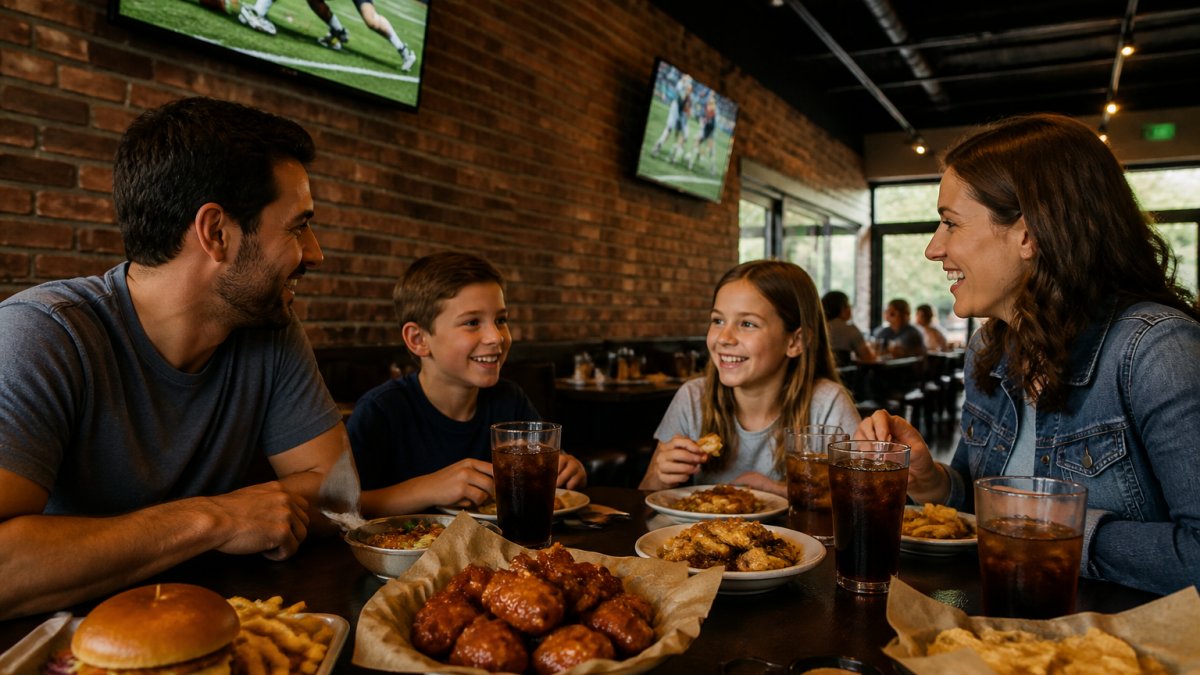
Crowd level. Dinner crowds peak from 6 p.m. to 8:30 p.m. and during major live sports broadcasts. Weeknights are quieter than Friday and Saturday.
Kitchen condition. A kitchen at 9 p.m. is usually fully staffed; by 11 p.m., staff have been cut and the kitchen is in close-down mode, so quality and speed can drop even when the menu looks the same.
Your schedule. Night-shift workers, second-shift hospitality staff, and travelers crossing time zones often can't choose 9 p.m.
A simple decision framework:
- Want the full menu and a moderate crowd? Go at 9 p.m. to 10 p.m. on a weeknight.
- Want the fewest people and don't mind a smaller menu? Go at 10:30 p.m. to 11:30 p.m.
- Need food after midnight? Choose a dedicated late-night kitchen or a 24-hour operation, and call first.
- Watching a game? Arrive before the opening whistle or after the final whistle; avoid the middle of the broadcast.
- On a night-shift schedule? Build a short list of verified late-night kitchens and rotate among them.
One more trade-off: the later you eat, the more meal timing affects sleep. Eating within two to three hours of bedtime, a lighter order, grilled wings instead of fried, a burger without heavy sides, a smaller portion, sits better than a full heavy meal, which is why many late-night diners order smaller than they would at 7 p.m.
Late-Night Bar Food: Quality and Menu Availability
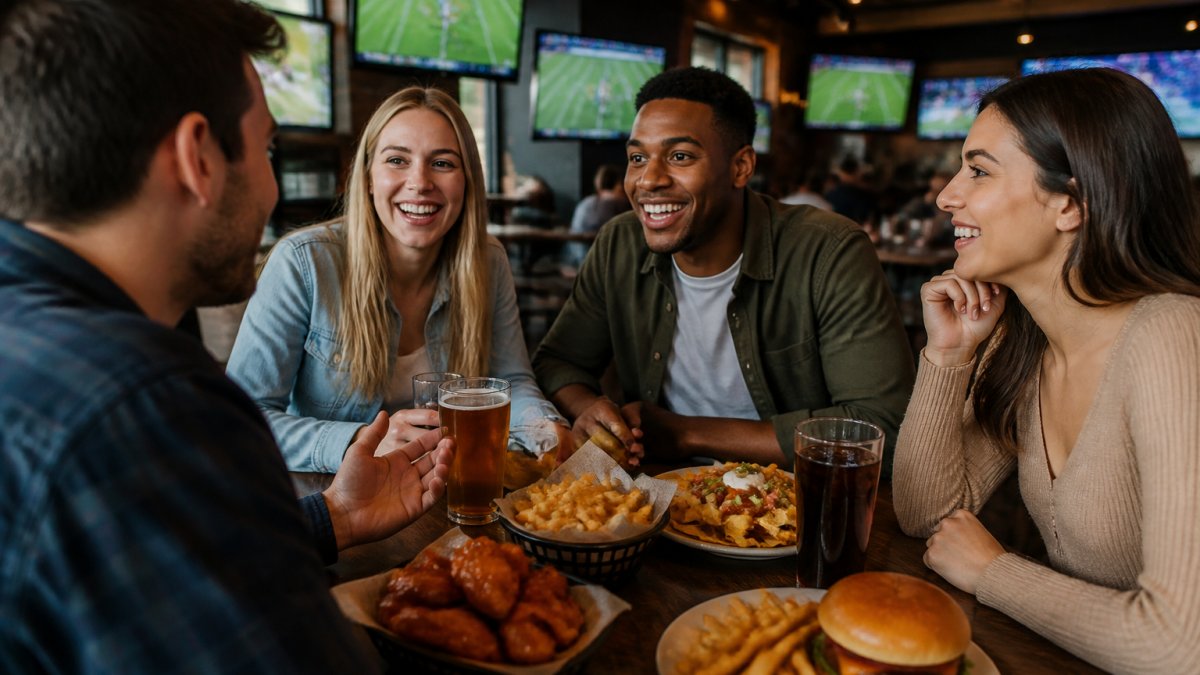
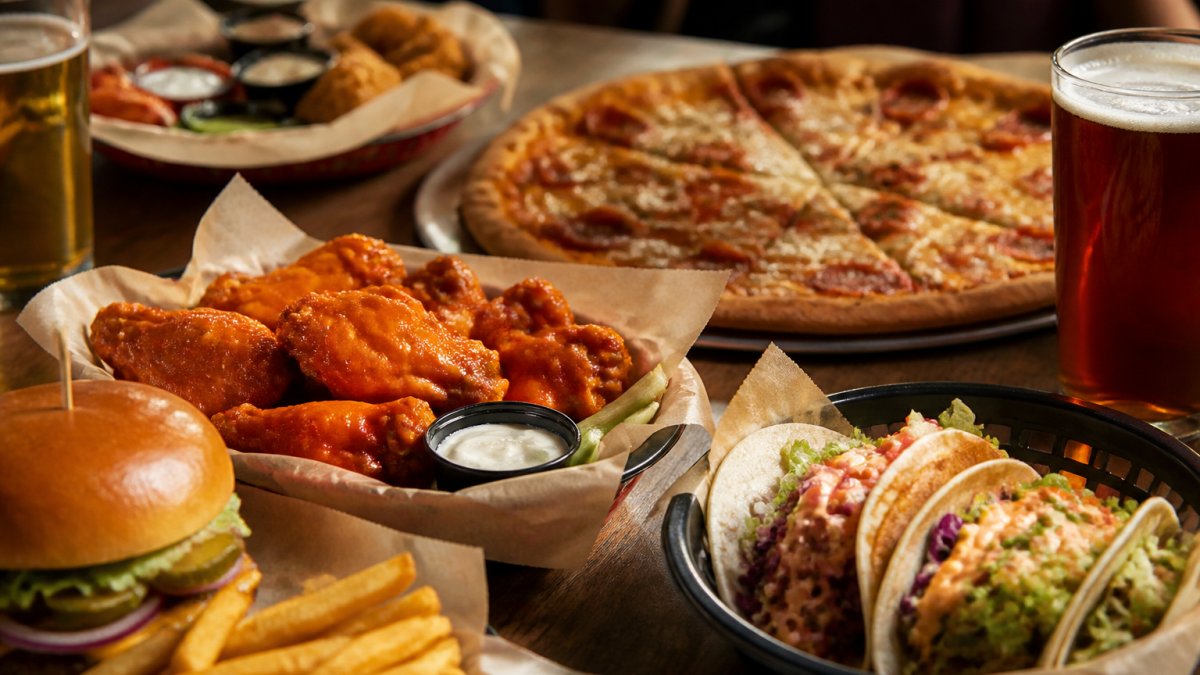
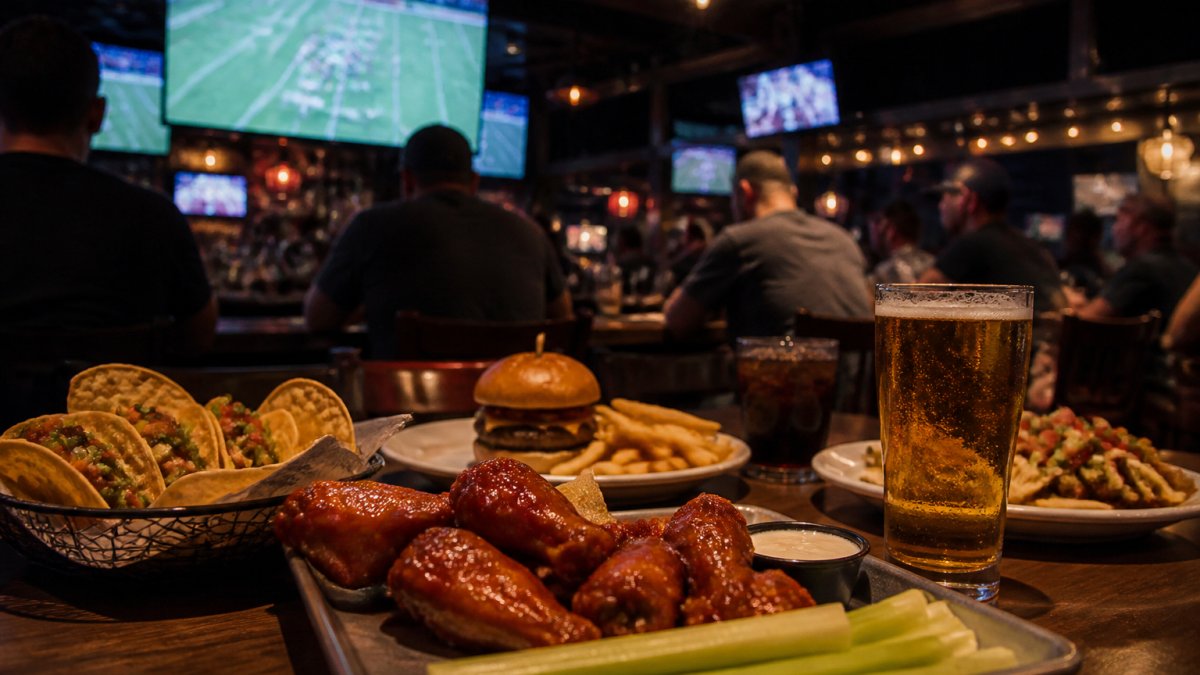
Bar food dominates late-night menus because wings, burgers, tacos, fries, and appetizers are fast to prepare and travel well for takeout. The real question is how to judge whether that food is fresh, safe, and worth ordering at 11 p.m. or 1 a.m.
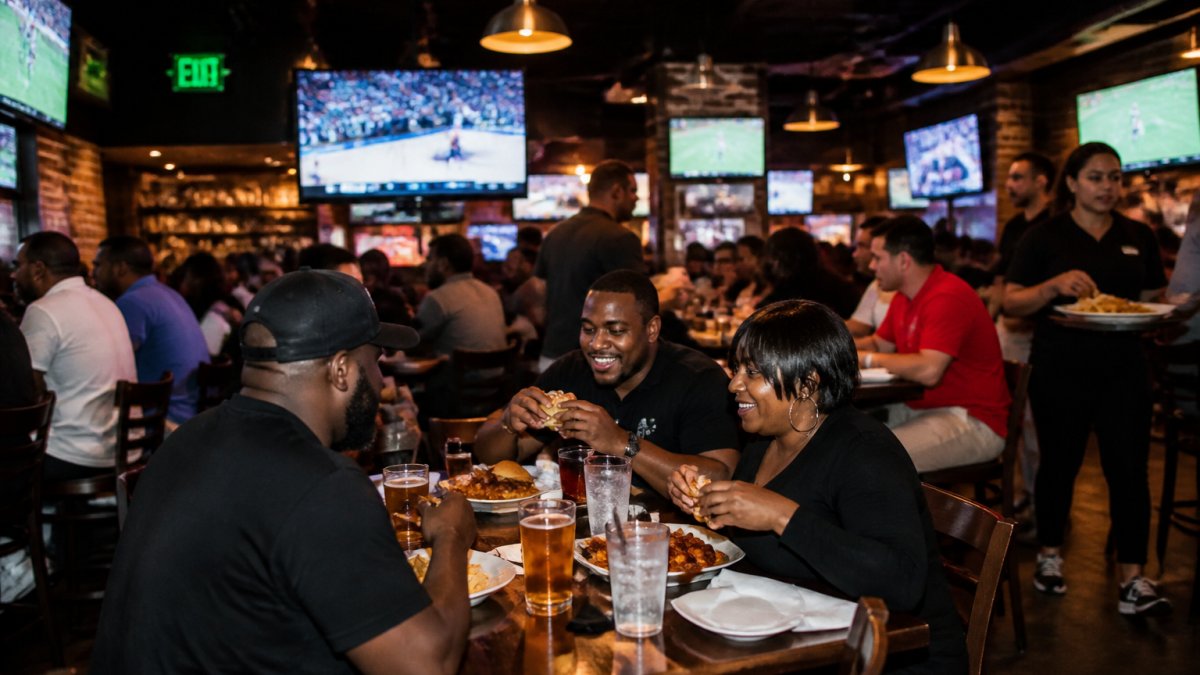
Menu availability shrinks after 10 p.m. at many bars. A common pattern is a full menu until 10 p.m., a limited late-night menu from 10 p.m. to midnight, and a bar menu after midnight.
Freshness depends on turnover, not the clock. A busy Saturday kitchen cooking wings to order all evening likely serves a fresh 1 a.m. order; a quiet Tuesday kitchen may hold items longer.
Food safety is a real late-night consideration. Near closing, staff break down stations and consolidate ingredients, which can mean slower service and, at poorly run places, shortcuts. The FDA Food Code sets holding-time and temperature standards regardless of the hour, but practice varies.
Ordering strategy for late-night bar food:
- Favor items cooked to order: grilled wings, burgers, fried items dropped fresh, tacos assembled on the line.
- Avoid items that sit: pre-made platters, items under heat lamps, and anything that looks like it was portioned hours earlier.
- Ask what the kitchen is still making. A good server will tell you what is fresh and what is running low.
- For takeout, choose items that travel well, wings, burgers, hearty sandwiches, and skip fries if the drive is long.
- If you are eating within a few hours of sleep, order lighter: fewer fried sides, smaller portions, and water alongside.
The best late-night bar food comes from kitchens that treat late service as a normal part of the business, not an afterthought. That means a full late-night menu, staff scheduled to cover it, and items cooked to order rather than held. When you find a place that does this consistently, it is worth keeping on your short list, and worth calling ahead to confirm the kitchen is still cooking before you make the trip.
Late-Night Food Delivery: Timing and Expectations
Food delivery apps show restaurants as "open" even when their kitchens have closed, a major late-night frustration.
Delivery takes time: order at 11 p.m. and 10-15 minutes of prep plus 15-30 minutes of driving means food arrives around 11:45 p.m. or midnight.
Some restaurants close their delivery kitchens earlier than their dine-in service. This is common.
Delivery quality suffers late at night, fries go soggy, hot food cools, cold items warm up. After midnight, choose items that travel well: wings, burgers, hearty food that holds up in transit.
Delivery pricing is higher late at night. Drivers are harder to find. Some apps charge extra fees for late-night orders. This is standard, but it's worth knowing before you commit.
The best late-night delivery experience comes from places designed for it. Sports bars and casual restaurants that specialize in takeout understand the timing challenges. They package food to travel.
Avoiding Crowds: When to Dine for a Better Experience
Restaurant crowds follow predictable patterns.
Peak times are:
- 6 p.m. to 8 p.m. (early dinner rush)
- 8 p.m. to 9 p.m. (main dinner service)
- During live games (especially NFL and college football)
Slower times are:
- Before 6 p.m.
- After 10 p.m. (for most restaurants)
- Between 2 a.m. and 3 a.m. (if you can eat that late)
- Weekday nights (Monday through Thursday are quieter than weekends)
For a table fast and a quieter meal, go after 10 p.m. on a weeknight: you'll avoid the crowd, get attentive service, and actually hear your friends talk.
The trade-off is menu availability. You get fewer choices and a smaller selection. But if you know what you want and you value peace over options, late-night is your answer.
Game nights change everything: a sports bar quiet at 10 p.m. fills up if a big game is on. To avoid a packed bar during a playoff game, arrive before it starts or wait until the crowd clears.
Wait times also depend on staffing: an understaffed kitchen will be slow even if the dining room looks empty, another reason to call ahead or check recent reviews.
How to Verify Current Kitchen Hours Before You Go
Calling ahead is the only reliable way to confirm that a kitchen is actually open when you plan to arrive.
Here's the fastest approach:
- Check the restaurant's website or Google Business listing for posted hours
- Call and ask specifically: "Is your kitchen open at [your time]?" Don't ask if the restaurant is open. Ask if the kitchen is cooking.
- If you're ordering delivery, confirm in the app that the restaurant accepts orders at your time
- Check reviews for recent comments about kitchen hours. People mention when they arrived and found the kitchen closed.
Many restaurants update hours seasonally or for special events, so listed hours may be outdated. A 30-second call confirms what you need to know.
Google Business listings are usually accurate but not perfect. If hours seem inconsistent or you're planning a late-night trip, call, it takes less time than driving there to find the kitchen closed.
For delivery, the app is your source of truth. If the app shows the restaurant as accepting orders, the kitchen should be open. But app information lags sometimes. Call if you're ordering close to closing time.
The thing nobody tells you about late-night dining is that it requires planning. A five-minute phone call prevents frustration.
Finding the right time for late-night dining depends on what matters to you: full menus, avoiding crowds, quality food, or fast service.
Frequently Asked Questions
What time is considered late-night dining?
Late-night dining typically begins after 9 p.m. or 10 p.m., though some venues serve food until midnight or later. For true late-night eats, many restaurants and bars stay open until 1 a.m., 2 a.m., or even 3 a.m. The definition varies by location and establishment type. Sports bars, diners, and casual restaurants are more likely to offer extended late-night dining hours than fine dining establishments.
How do I verify that a restaurant's kitchen is still open late at night?
Check the venue's website or call ahead to confirm kitchen hours, not just dining room hours. Many restaurants close their kitchens before they close their doors. Google Maps and Yelp show operating hours, but always verify by phone if you're traveling late. Ask specifically whether the full menu is available or if only limited items are served after a certain time. This prevents disappointment when you arrive to find the kitchen closed or serving only bar snacks.
Is late-night food delivery available, and how late can I order?
Late-night food delivery depends on your location and the restaurant. Many sports bars and casual restaurants offer delivery through their own websites or third-party apps until 1 a.m. or 2 a.m. Delivery times are typically longer during late-night hours due to lower driver availability. Check with your preferred venue directly for their delivery cutoff time and expected wait. Keep in mind that food quality can vary when ordered very late, so choose restaurants known for maintaining consistency.
Are restaurants less crowded if I dine late at night?
Yes, most restaurants are less crowded after 10 p.m., especially on weeknights. However, sports bars and venues near entertainment districts remain busy during major sporting events or on weekends. If you want a quieter experience, aim for 10 p.m. to midnight on weekdays. Late-night dining after 1 a.m. is typically slower, though some venues cater to night-shift workers and late-night crowds. Check the venue's calendar for game days or special events that might affect crowd levels.