 Listicle
Game Day Catering Options: Feeding a Large Crowd
Last Updated: November 13, 2026
Quick Summary
Game day catering for large groups works best when you match the format to your venue and headcount: buffets suit 20-50 guests, food stations fit 30 or more in open floor plans, and individual boxes handle unknown headcounts. Build the menu around wings, sliders, and shareable platters, and keep hot food at or above 140°F.
- Buffet catering handles 20-50 guests with one serving line and familiar food.
- Food stations suit 30 or more guests and spread the crowd out to keep lines short.
- Individual boxes reduce waste when attendance is uncertain because each box is one serving.
- Build-your-own buffets have the lowest cost per person because portions stretch further.
- Keep hot foods at or above 140°F and discard perishables left out beyond two hours.
Table of Contents
- Matching Game Day Catering Options to Your Guest Count and Venue
- Football Party Catering Formats: Buffet, Food Stations, and Individual Boxes
- Game Day Party Platters and Shareable Appetizers That Disappear Fast
- Wings, Sliders, and Hero Sandwiches: Building a Crowd-Pleasing Menu
- Tailgate Party Catering: Hot Dogs, Sausages, and Portable Comfort Food
- Cheap Food for a Crowd: Budget Comparisons and Cost Per Person
- Dietary Restrictions, Food Safety, and Keeping Food at Serving Temperature
- Plan Your Game Day Spread with Crowne Sports Bar & Grill
- Frequently Asked Questions
Matching Game Day Catering Options to Your Guest Count and Venue
Game day catering for large groups starts with two numbers: how many people you're feeding and where they'll eat. Get those wrong and even a great menu turns into a scramble. Hosts often over-order platters and under-order seating. This guide walks through game day catering options by format, budget, and guest count so you can order once and get it right.
How Much Food to Order for a Large Game Day Party
For a deeper planning framework around guest count and venue, see our step-by-step group watch party guide.
Home Party vs. Tailgate: Logistical Differences That Change Your Order
A home party needs serving space, outlets, and trash capacity. A tailgate needs food that travels and holds temperature without a kitchen nearby. That single difference reshapes the order.
At home, buffet trays and chafing dishes work fine, and you can plate in courses. At a tailgate, choose items that survive a cooler and a folding table: wings, sausage rolls, wrapped sandwiches, and dips in sealed containers. Skip anything that needs last-minute assembly or a heat source you don't have.
Watch out: ordering hot food for a tailgate without a way to hold it above 140°F means the last hour of the party is a food-safety risk, not just a taste problem.
Football Party Catering Formats: Buffet, Food Stations, and Individual Boxes
Football party catering comes in three workable formats, and the right pick depends on your space and how much control you want over the flow of guests. Here's how they compare.
| Format | Best For | Setup Effort | Main Trade-off |
|---|---|---|---|
| Buffet | 20-50 guests, seated or mixed seating | Moderate | One long line at peak hunger |
| Food stations | 30+ guests, open floor plan | Higher | Needs more table space |
| Individual boxes | Corporate events, unknown headcount | Low | Less variety per guest |
Buffet catering is the default for a reason: it handles a large group with one serving line and familiar food. Food stations, like a taco bar or burger bar, spread the crowd out and keep lines short. Individual boxes suit events where people drift in and out and you need exact portions. For a closer look at how each format plays out for groups, our breakdown of sports bar food catering options for groups covers the practical differences.
Game Day Party Platters and Shareable Appetizers That Disappear Fast
Game day party platters work best when they mix textures and heat levels: something crispy, something creamy, something handheld. Build your spread around shareable appetizers that people can grab without a plate and keep eating while they watch.
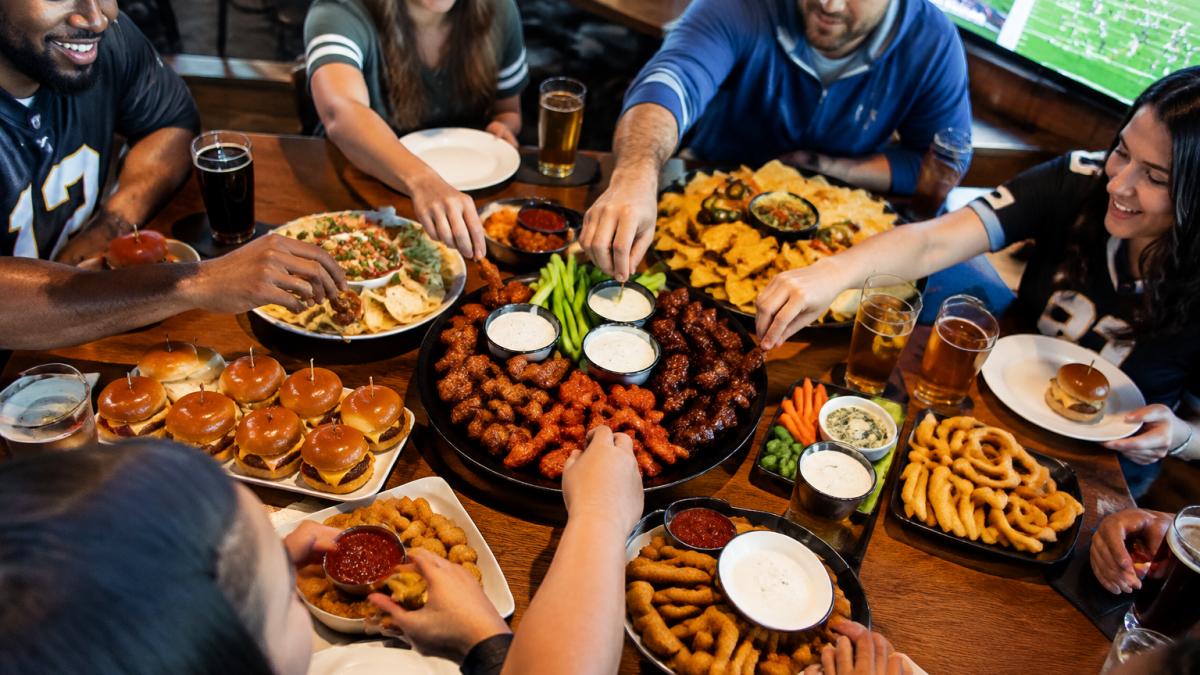
The platters that empty first tend to be wings, loaded fries, mozzarella sticks, and hearty dips with chips or bread. Add one or two lighter options so the spread doesn't feel heavy by the fourth quarter. If you want specific platter ideas that hold up for a big crowd, our list of best game day appetizers for groups is a solid starting point.
Wings, Sliders, and Hero Sandwiches: Building a Crowd-Pleasing Menu
A crowd-pleasing menu balances three things: a protein anchor, a handheld, and a shareable side. Chicken wings anchor the spread, sliders and burgers give guests something substantial, and hero sandwiches or a sandwich bar cover the guests who want a full meal without a fork.
Build variety by flavor, not just by item. Offer wings in a mild, a hot, and a dry-rub option. Run sliders in two or three styles. Add a sandwich bar with cold cuts, cheese, and toppings so guests assemble their own. Comfort food like fried chicken rounds out the menu for anyone skipping the handhelds.
The mistake most hosts make is ordering five versions of the same thing. Three well-chosen categories beat eight overlapping ones.
Tailgate Party Catering: Hot Dogs, Sausages, and Portable Comfort Food
Tailgate party catering rewards food that holds up in a parking lot. Hot dogs, sausages, and pre-wrapped sandwiches travel well, stay warm in a cooler or chafer, and need almost no serving equipment.
Keep the tailgate menu tight: one grill item, one cold item, one dip, and drinks. Sausages and hot dogs cook fast and feed a line quickly. Add coleslaw, potato salad, or macaroni salad in sealed containers, and bring sturdy buns that won't fall apart. Skip anything that needs a knife and fork.
Portable comfort food wins here. Wrapped hero sandwiches, fried chicken in a lidded tray, and handheld desserts all work without a table full of serving dishes.
Cheap Food for a Crowd: Budget Comparisons and Cost Per Person
Cheap food for a crowd comes down to cost per person, not the sticker price of one platter. A tray that looks expensive can beat a cheap option once you divide by servings, and the format you choose moves the number more than any single menu item.
Here is how the main formats tend to rank on cost per person, from lowest to highest:
- Build-your-own buffet: the lowest cost per person, because starches and proteins stretch further and you control the portion sizes. Wings, sliders, a pasta or potato side, and a dip cover a crowd without premium per-item pricing.
- Pre-set platters and party packages: slightly higher per person, but predictable. You know the headcount each platter serves, so waste is easier to control.
- Individual boxed meals: higher per head than a buffet, but they reduce waste when attendance is uncertain because each box is one serving.
- Full-service staffed catering: the highest cost per person, because you are paying for labor, setup, serving, and cleanup on top of food.
Delivery fees, disposable serving ware, and minimum order sizes can swing the final number by a meaningful margin, so compare quotes on the same headcount and the same menu. Ask each caterer three questions: what is the price per person at your guest count, what does delivery and setup add, and what is the minimum order. Those three answers make quotes comparable.
A practical way to budget is to set a per-person target first, then choose the format that fits it. If the target is tight, a buffet built on wings, sliders, and a starch-heavy side gets you there. If the target has room, boxed meals or staffed service buy convenience and less waste. Pricing depends on quantity, menu, and delivery, so ask for a quote rather than guessing from a menu photo.
Watch out: a low per-platter price can hide a high cost per person if the platter serves fewer people than you assume, so always divide by the stated serving count before comparing.
For budget-first planning around per-person costs, our budget-friendly game day guide breaks down where the money actually goes.
Dietary Restrictions, Food Safety, and Keeping Food at Serving Temperature
Inclusive menu planning means every guest finds at least two things they can eat without asking. Label dishes clearly, and build in vegetarian, gluten-free, and dairy-free options as part of the main spread rather than as afterthoughts.
Food safety matters more at a long party than a short one. The USDA advises keeping hot foods at or above 140°F and cold foods at or below 40°F, and discarding perishable food left out beyond two hours. Set timers, use chafing dishes for hot items, and keep cold platters on ice. For the full temperature guidance, see the USDA food safety guidance on the two-hour rule.
Plan Your Game Day Spread with Crowne Sports Bar & Grill
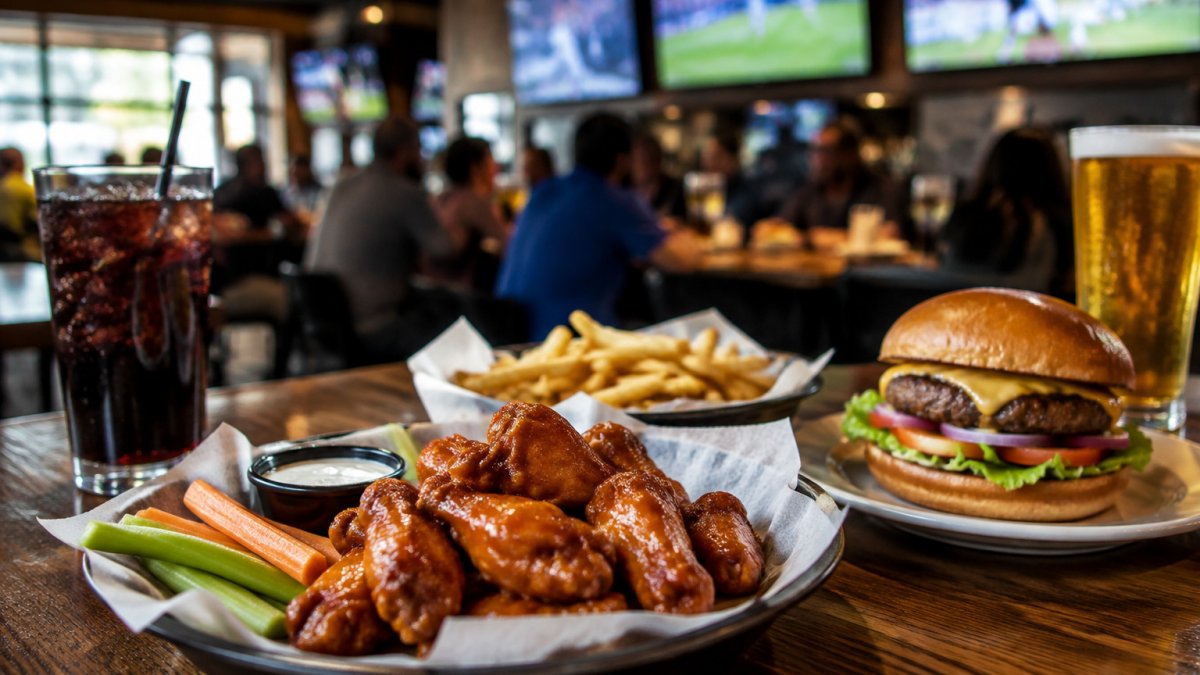
The easiest way to feed a large group without juggling trays and timers is to let someone else handle the food. Crowne Sports Bar & Grill serves wings, burgers, and tacos on big screens on Jimmy Carter Blvd, with delivery available.
Order for delivery, or bring your group in for happy hour and late-night eats. Browse the Crowne Sports Bar & Grill menu and game day offerings to place your order.
Feeding a crowd shouldn't mean missing the second half. Crowne Sports Bar & Grill offers big-screen game days, a diverse menu of bar favorites, and delivery so your group eats well without the setup work. Get started with Crowne Sports Bar & Grill and put your game day spread on our tab.
Frequently Asked Questions
How much food should you order for a large game day party?
Plan on roughly 6 to 8 appetizer pieces per guest for the first two hours, plus about 1 pound of main dishes like wings or sliders per person if the party runs through a full game. For a mixed menu with platters, dips, and sides, estimate 10 to 12 total items per guest. Groups with big appetites or all-day events (doubleheaders, draft nights) should lean toward the higher end. Always round up rather than down.
What is the cheapest way to feed a large crowd at a game day party?
Potluck-style supplementing, where guests bring sides or desserts, can help keep the total manageable. For specific pricing, depends on quantity, menu, and delivery; visit the Crowne Sports Bar & Grill website for current prices or a quote.
How far in advance should you order catering for a game day event?
Lead times depend on group size, the date, and delivery; contact Crowne Sports Bar & Grill directly or visit its website to confirm availability.
What foods are easiest to serve at a tailgate or watch party?
Foods that hold temperature and don't need last-minute assembly tend to work best for tailgates and watch parties. Ask Crowne Sports Bar & Grill which items are available for your event.