 blog
5 Best Craft Beer Pairings for Burgers
Table of Contents
- Why Craft Beer and Burgers Are the Perfect Match
- The 5 Best Craft Beer Pairings for Burgers
- How to Pair Beer with Food: A Simple Framework
- Matching Beer Flavor to Burger Flavor: Richness and Bitterness
- Pairing Beer with Toppings and Sauces
- Nonalcoholic Craft Beer Options for Burgers
- Conclusion
- Frequently Asked Questions
Last Updated: October 17, 2026
Why Craft Beer and Burgers Are the Perfect Match
Craft beer and burgers go together like game day and big screens. At Crowne Sports Bar & Grill, we know beer cuts through the richness of a juicy burger, refreshing your palate with every sip.
A cold craft beer complements fatty beef in ways soda or water cannot: carbonation tickles your tongue, hops balance richness, and malt sweetness echoes the char on a grilled patty.
That's why sports bars and cookouts have served beer with burgers for decades, it's chemistry, not just tradition. Understand how these flavors interact and you can pick the perfect pairing.
The 5 Best Craft Beer Pairings for Burgers
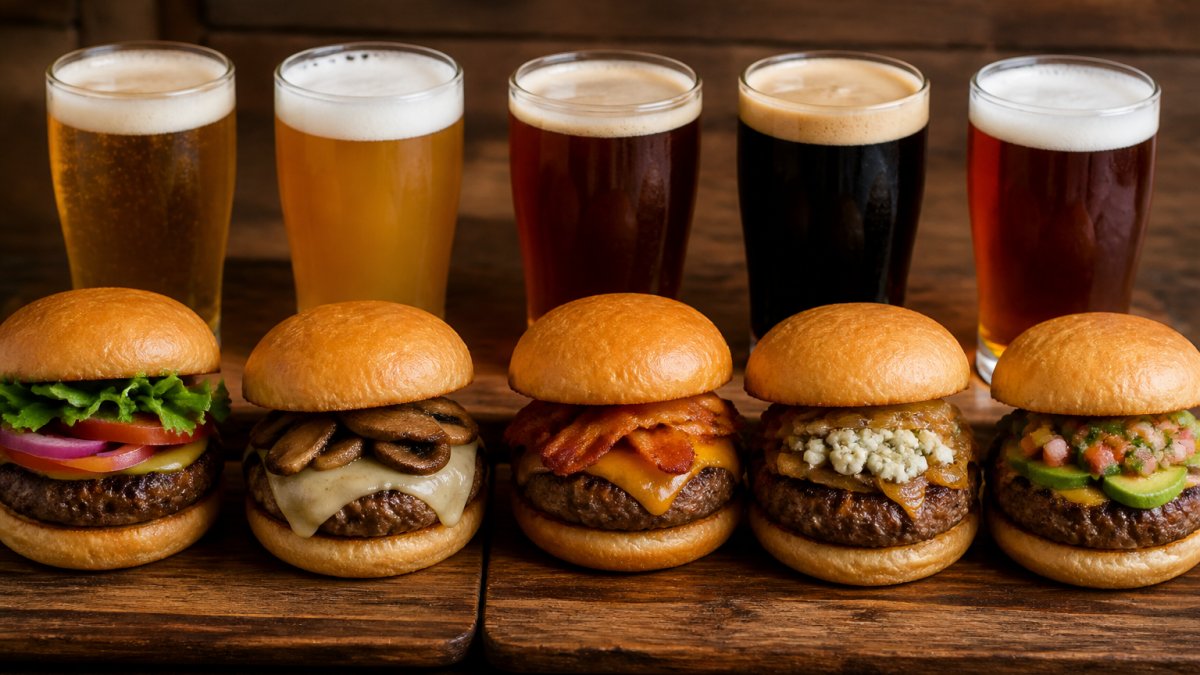
Choosing the right craft beer for your burger transforms a good meal into a great one. Here are five reliable pairings, whether you're at our bar or grilling at home.
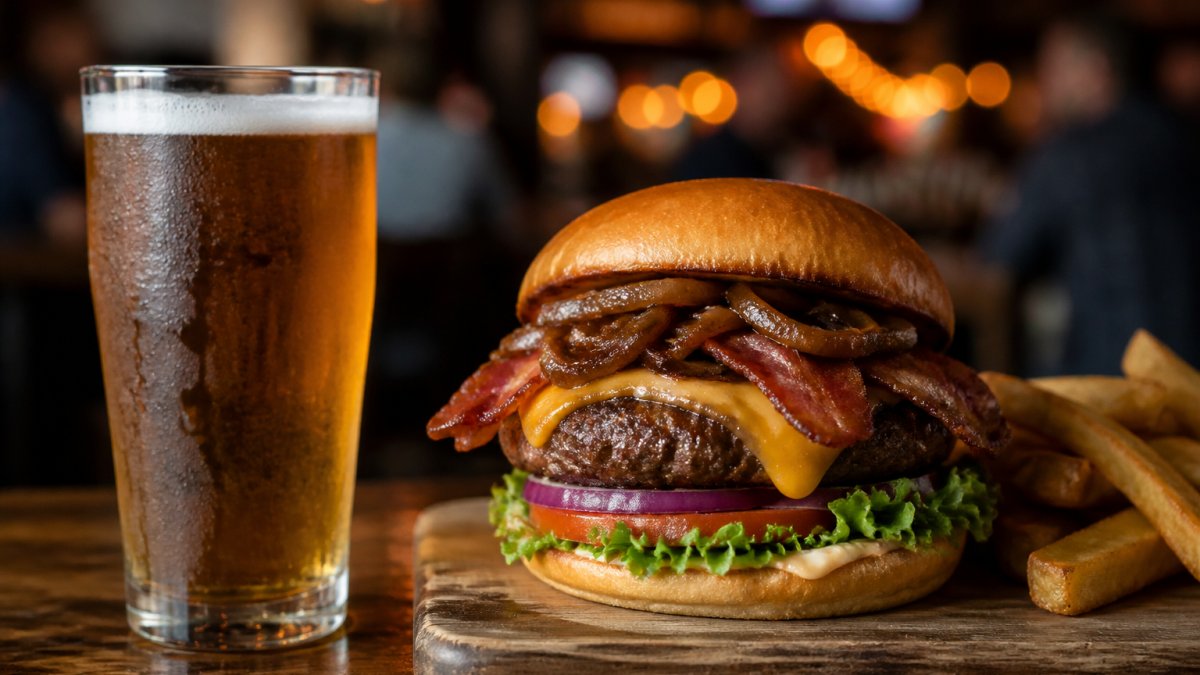
1. Pale Ale with Classic Beef Burgers
A Pale Ale is the go-to for a straightforward beef burger. Moderate hop bitterness and a crisp finish cut through the fat in the meat without overwhelming your palate.
Pale Ales have a light to medium body, making them versatile for burgers without fancy toppings, and fruity notes add subtle sweetness that complements the savory beef.
For more flavor complexity, look for single-hop Pale Ales, which highlight one hop variety so you can taste exactly what it brings.
Serving details: Serve a Pale Ale at about 45-50°F in a nonic pint or tulip glass. A moderate pour with a finger of head releases hop aroma without flattening carbonation.
Doneness and cooking method: A medium-rare patty (about 130-135°F internal) stays juicy, so the Pale Ale's bitterness has more fat to cut.
2. Amber Ale with Cheeseburgers
Add cheese, and an Amber Ale becomes your best friend. More malt character than a Pale Ale makes it slightly sweeter and fuller-bodied, and its roasted malt flavors echo the char on a grilled burger.
Cheese adds richness and fat; the Amber Ale's roasted malt balances it while moderate hop bitterness keeps the pairing from feeling heavy.
Cheddar burgers work especially well: aged cheddar's sharpness plays nicely with malt sweetness. Swiss also works, the key is that roasted malt foundation.
Serving details: Amber Ales show best at 45-55°F in a pint glass or mug. The warmer temperature lets caramel and toasted-malt notes come forward, exactly what you want against melted cheese.
Doneness and cooking method: A medium cheeseburger (about 140-145°F) has enough fat to carry the Amber Ale's fuller body. Smashing the patty on a flat-top adds Maillard sweetness that mirrors the beer's caramel notes.
3. IPA with Spicy Burgers
An IPA (India Pale Ale) is built for bold flavors. If your burger has jalapeños, hot sauce, or spicy mayo, reach for an IPA. The high hop bitterness and alcohol content stand up to heat without backing down.
IPAs are dry-hopped for intense aroma and flavor. The bitterness cuts through spice, the carbonation cools your mouth between bites, and the higher alcohol balances the heat.
A burger with sriracha, cayenne, or ghost pepper sauce needs an IPA's backbone; lighter beers disappear next to that heat.
Serving details: Serve an IPA at 45-50°F in a tulip or snifter. The narrower rim concentrates hop aroma, and the moderate temperature keeps bitterness from reading as harsh.
Doneness and cooking method: A medium-rare spicy burger stays juicy, and the IPA's bitterness cuts the fat while carbonation cools the capsaicin.
4. Hefeweizen with Grilled and Smoky Burgers
Hefeweizen brings something different: a smooth, creamy wheat beer that tastes fruity and slightly sweet, with banana and clove notes that complement smoky, grilled burgers beautifully.
Smoky burgers, charred, or cooked over wood or charcoal, can feel heavy on their own. A Hefeweizen's light body and fruity sweetness refresh your palate without fighting the smoke.
Hefeweizen also works with burgers topped with fried onions or tomato jam; the beer's sweetness echoes these toppings.
Serving details: Serve a Hefeweizen at 40-45°F in a tall Weizen glass. Pour with a slow tilt, then swirl the last ounce to rouse the yeast, where the banana and clove character lives.
Doneness and cooking method: A medium burger (about 140-145°F) cooked over charcoal or wood gives the smoke that the Hefeweizen's fruity sweetness contrasts.
5. Pilsner with Plant-Based Burgers
Plant-based burgers need a beer that won't overpower their delicate flavors. A Pilsner is crisp, clean, and light, with just enough hop bitterness to add interest without dominating.
Pilsners use subtle noble hops and finish dry, a dryness that complements the earthy or umami notes in plant-based patties.
A Pilsner also works with lighter toppings like lettuce, tomato, and mustard, letting those fresh flavors shine.
Serving details: Serve a Pilsner at 38-42°F in a fluted or tall, narrow glass. The cold temperature and tight carbonation keep it crisp, and the narrow shape preserves the head. Pour down the side of the glass to keep the foam tight.
Doneness and cooking method: Plant-based patties vary widely. A firm pea-protein patty handles a Pilsner with more hop bite (around 30-35 IBU); a softer bean-based patty needs a gentler Pilsner (around 25-30 IBU) so the beer doesn't dominate.
How to Pair Beer with Food: A Simple Framework
Pairing beer with food doesn't require a degree in brewing, just one simple rule: Beer pairing works through two methods: complement and contrast.
Complement means the beer's flavors echo the food's flavors. A roasted malt beer complements a grilled burger because both have roasted, savory notes.
Contrast means the beer's flavors balance the food's flavors. A hoppy, bitter beer contrasts with a rich, fatty burger because bitterness cuts through fat.
Most great pairings use both at once. How to think about it:
- Match richness with body. A heavy burger needs a full-bodied beer. A light burger works with a light beer.
- Match intensity with intensity. A bold burger needs a bold beer. A simple burger works with a subtle beer.
- Use bitterness to cut through fat. Hops are your friend when fat is on the plate.
- Use sweetness to balance spice. Malt sweetness cools the burn of hot sauce.
This framework works for any burger and any craft beer, no memorizing pairings, just thinking about the flavors in front of you.
Matching Beer Flavor to Burger Flavor: Richness and Bitterness
The two biggest factors in beer-and-burger pairing are richness and bitterness; understanding them guides almost every decision.
Richness comes from fat: a beef patty, cheese, bacon, mayonnaise, butter. A rich burger tires your palate quickly, so you need a beer that refreshes.
Bitterness comes from hops.
A burger with a lot of fat needs a beer with a lot of bitterness. A simple burger with lean meat needs less bitterness.
The same logic applies to malt sweetness. A burger with sweet toppings (tomato jam, caramelized onions, glazed bacon) pairs well with beers that have malt sweetness.
Smoky burgers need beers that won't fight the smoke. A Hefeweizen's fruitiness works. A Pilsner's crispness works. A heavily roasted stout would fight the smoke and feel too heavy.
A common mistake is pairing a rich burger with a light, delicate beer. The beer disappears. You taste only the burger's heaviness. Always match the burger's richness with a beer that has enough body and flavor to hold its own.
Pairing Beer with Toppings and Sauces
What goes on top of your burger matters as much as the patty itself.
A simple ranking method: List your toppings from mildest to boldest.
Cheese makes a burger richer and more savory. Aged cheddar adds sharpness, Swiss adds nuttiness, Brie adds creaminess.
Bacon adds smokiness and saltiness. It's rich and intense. A Pale Ale or IPA handles bacon well.
Fried onions add sweetness and crunch. They pair well with beers that have malt sweetness. Hefeweizen works.
Tomato jam is sweet and tangy. It needs a beer that won't be overwhelmed by sweetness.
Spicy sauces (sriracha, hot sauce, jalapeños) need beers with high hop bitterness and alcohol content.
Mustard is tangy and sharp. It pairs well with crisp, clean beers. Pilsner is perfect.
Mayo and special sauces add richness and umami.
| Topping | Beer Style | Why It Works |
|---|---|---|
| Cheddar cheese | Amber Ale | Roasted malt echoes grilled flavors |
| Bacon | IPA | Hops cut through smokiness and salt |
| Fried onions | Hefeweizen | Malt sweetness complements fried sweetness |
| Tomato jam | Pilsner | Crisp finish balances sweet-tangy combo |
| Jalapeños | IPA | Bitterness and alcohol stand up to heat |
| Mustard | Pilsner | Clean, crisp beer matches sharp tang |
| Mayo | Amber Ale | Full body matches sauce's richness |
Combining toppings: Most burgers have more than one topping, so use the ranking method.
Nonalcoholic Craft Beer Options for Burgers
Not everyone drinks alcohol. The good news: nonalcoholic craft beers have improved dramatically. Many now offer real flavor without the alcohol content.
Nonalcoholic beers work with burgers using the same logic as regular beers. You want flavor, bitterness, and body to match your burger.
Nonalcoholic IPAs are now common. They deliver hop bitterness and aroma. They pair with spicy burgers just as well as regular IPAs.
Nonalcoholic Pale Ales are crisp and balanced. They work with classic beef burgers.
Nonalcoholic Amber Ales have malt sweetness and body. They pair with cheeseburgers. The roasted malt character is usually preserved well in nonalcoholic versions.
Nonalcoholic lagers (like Pilsner-style) are clean and refreshing. They work with lighter burgers and plant-based options. The crisp finish is present even without alcohol.
Many craft breweries now make nonalcoholic versions of their popular beers. Check what's available at your local store or bar.
Nonalcoholic craft beers are best for designated drivers, pregnant people, those avoiding alcohol for health reasons, and anyone who wants to enjoy beer flavor without intoxication.
Conclusion
The perfect burger deserves the perfect beer. Whether you're enjoying a classic beef patty or a plant-based option, the right craft beer makes the meal better. At Crowne Sports Bar & Grill, we stock a wide selection of craft beers specifically chosen to pair with our burgers and bar favorites. Stop by for a game-day meal, a late-night bite, or happy hour, and let us help you find your ideal pairing. Visit us on Jimmy Carter Boulevard and discover why craft beer and burgers are a match made in heaven.
Frequently Asked Questions
What is the best craft beer to pair with a burger?
The best craft beer pairing depends on your burger's toppings and cooking style. Pale Ales work well with classic beef burgers, while Amber Ales complement cheeseburgers. IPAs cut through spicy or heavily topped burgers with their hop-forward bitterness. Start with these five options and adjust based on your burger's richness and flavor profile.
How do you choose a craft beer to match a burger's toppings?
Match beer intensity to topping intensity. Light, crisp beers pair with simple burgers and fresh toppings like tomato and lettuce. Fuller-bodied beers work with bacon, fried onions, and rich sauces. Spicy toppings need hop-forward beers that cut through heat. Consider the sauce too: tangy or smoky sauces pair well with fruity or roasted malt notes.
What beer pairs well with a cheeseburger?
Amber Ale is an excellent choice for cheeseburgers. The malt sweetness and caramel notes complement the richness of melted cheese while the moderate bitterness cuts through fat. Pale Ales and balanced IPAs also work well. Serve your beer chilled to contrast with the warm, savory burger and help cleanse your palate between bites.
Can you pair craft beer with plant-based burgers?
Yes. Plant-based burgers benefit from crisp, light-bodied beers like Pilsners and Hefeweizens, which don't overpower the subtler flavors. If your plant-based burger has bold toppings or smoky seasonings, a Pale Ale or dry-hopped beer works well. The key is balancing the beer's body and bitterness with the burger's texture and flavor intensity.