 Listicle
Sports Bar Food Delivery: Is It Worth It in 2026?
Table of Contents
- The Real Cost of Sports Bar Food Delivery
- How Delivery Affects Food Quality and Temperature
- Best Places for Wings and Beer: Delivery vs. Dine-In
- Late Night Food Delivery Options for Sports Fans
- Game Day Logistics: Why Timing Matters
- Takeout vs. Delivery vs. Dining In: A Cost-Benefit Analysis
- Conclusion: Is Sports Bar Food Delivery Worth It?
- Frequently Asked Questions
Last Updated: September 27, 2026
The Real Cost of Sports Bar Food Delivery
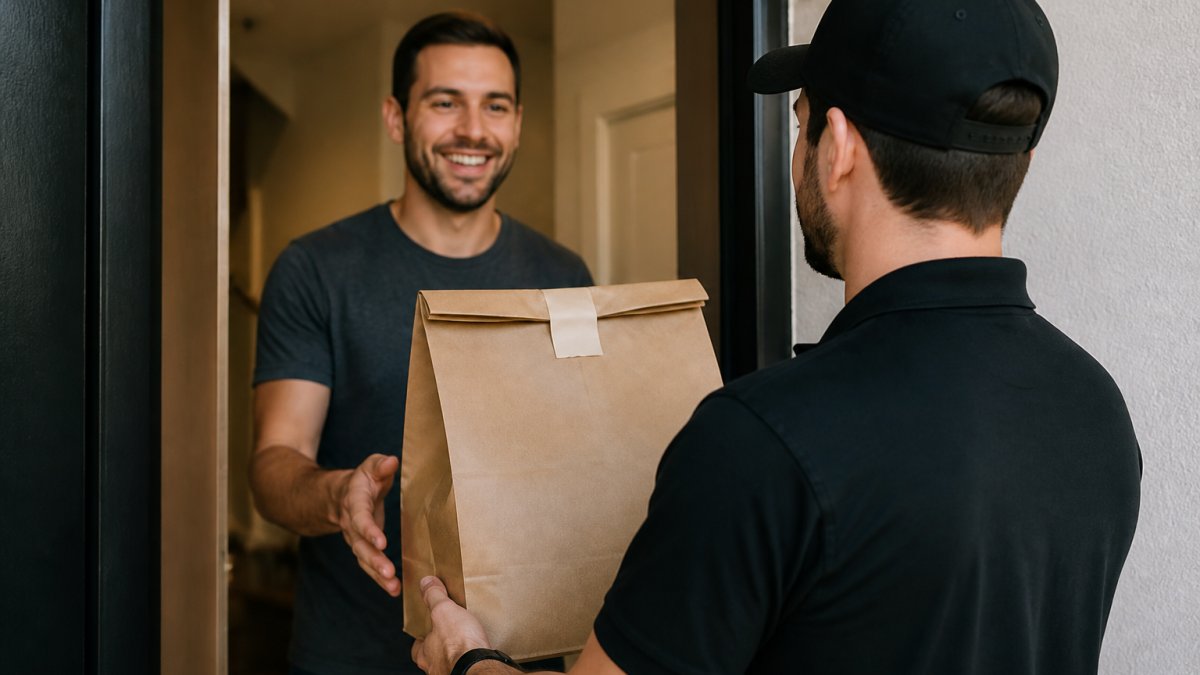
Sports bar food delivery is worth it when convenience and game-day timing matter more than squeezing every dollar out of a meal. It comes down to one thing: the gap between the menu price you see and the total you actually pay.
At Crowne Sports Bar & Grill, we watch this play out every weekend: fans order wings and burgers to the couch, then wonder why a $30 order turned into $45. The food was never the problem. The fees were.
Below, we break down what delivery really costs, how it affects food quality, and when to order in versus heading to the bar.
Hidden Fees That Add Up
Sports bar food delivery costs more than the menu price because of stacked fees. Most orders carry a delivery fee, a service fee, a small-order charge, and a driver tip. Some apps also mark up menu items above in-store prices.
These charges rarely appear together until checkout, by which point you have already picked your food.
A few line items to check before you confirm:
- Delivery fee: the base charge for the trip
- Service fee: often a percentage of your subtotal
- Small-order fee: added when your cart falls below a minimum
- Menu markup: items priced higher than in the restaurant
- Driver tip: usually expected, sometimes suggested by default
Apps like Grubhub's fee transparency guidance have pushed for clearer breakdowns, but the totals still surprise people.
How Delivery Affects Food Quality and Temperature
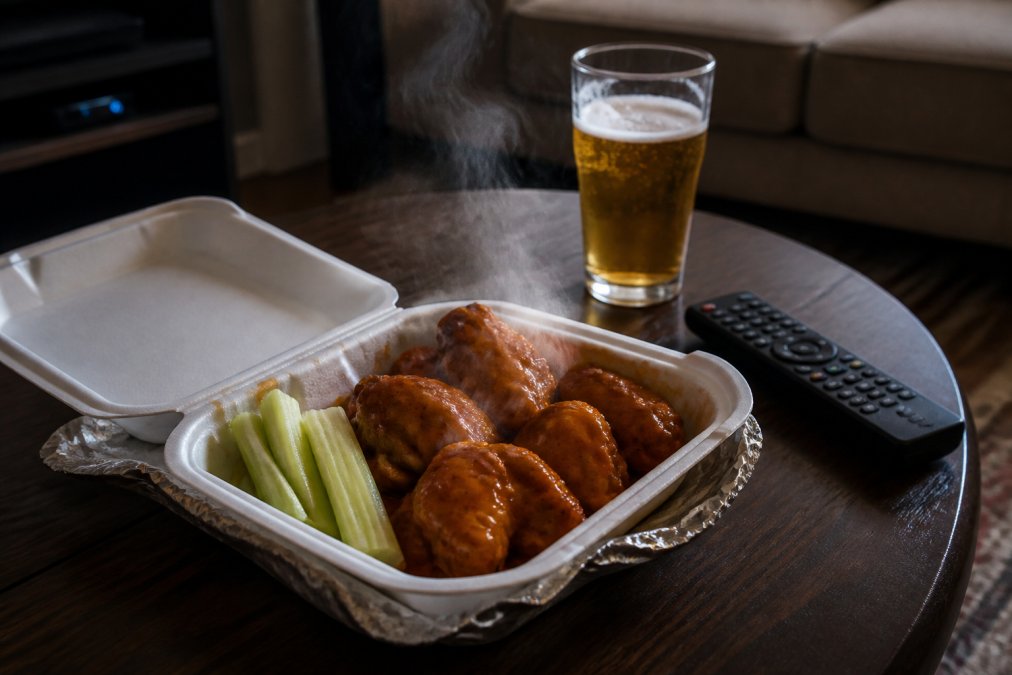
Food quality drops the moment a hot item leaves the kitchen, and the reason is physics, not bad luck. Three forces work against your order in transit: moisture migration, steam entrapment, and the temperature danger zone.
Which Foods Travel Best
Some bar food survives the trip; some does not. The dividing line is surface area, moisture content, and packaging.
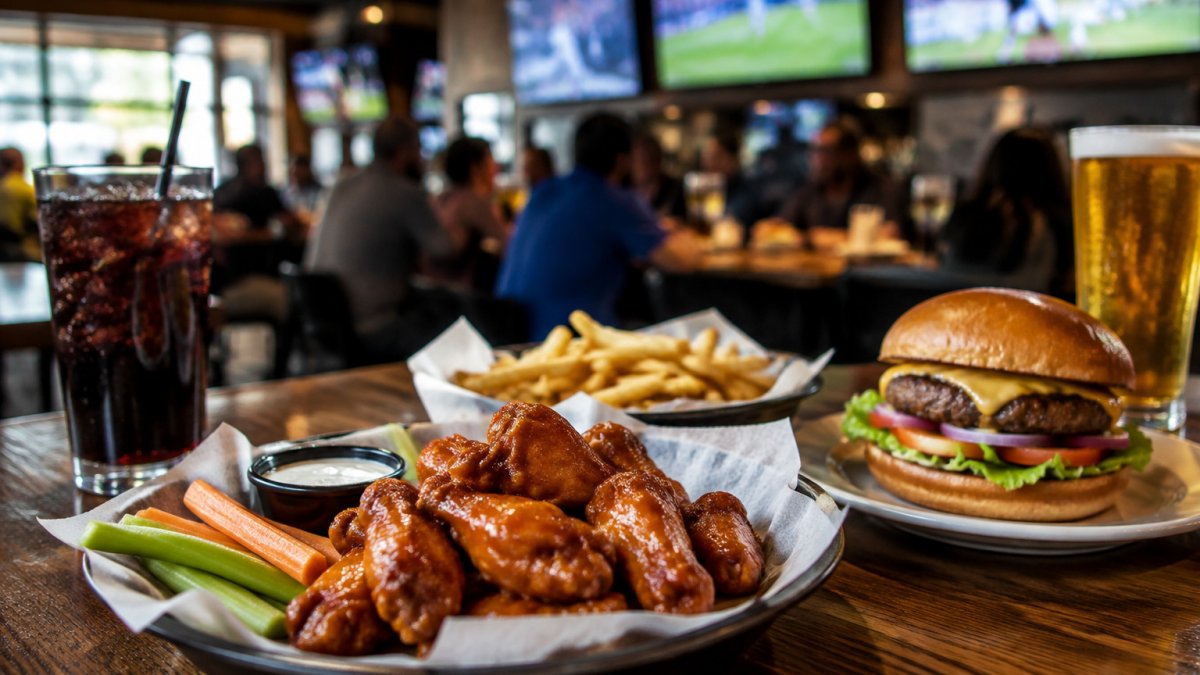
- Wings: travel well, especially dry-rubbed or sauced on the side. Bone-in holds heat longer than boneless because the bone acts as a thermal mass.
- Burgers: decent if the bun, patty, and toppings are packed separately. Assembled burgers steam themselves soggy in under ten minutes.
- Tacos: risky. Corn shells soften fast against moist fillings; crunchy shells crack under stacked weight.
- Fries: the weakest link. A sealed container traps steam, and fries go limp in roughly the time it takes a driver to reach the first stop.
- Apps and finger foods: mozzarella sticks, pretzels, and fried pickles hold up better than expected because their crusts are dense and low-moisture.
- Salads and cold sides: travel best of all, since there is no heat to lose.
The Delivery-Proof Menu Guide
| Category | Travels Well | Travels Poorly | Why |
|---|---|---|---|
| Wings | Dry-rubbed, sauce on side | Heavily sauced, packed hot and sealed | Sauce + steam = soggy coating |
| Burgers | Deconstructed, toppings separate | Fully assembled | Bun absorbs grease and juice |
| Fried items | Thick-battered apps | Thin-cut fries, onion straws | Surface area drives moisture uptake |
| Mexican | Soft tacos, burritos | Hard-shell tacos | Shells crack or soften |
| Sides | Coleslaw, pickles, chips | Mashed potatoes, gravy | Water content and heat retention |
A few practical moves that make a real difference:
- Ask for sauces and dressings on the side. This is the single highest-impact request you can make.
- Request vented or unsealed packaging for anything fried, if the platform allows a note.
- Order items that reheat well if you expect a long wait, wings, burgers, and pretzels recover better in an oven or air fryer than fries do.
- Skip the ice in drinks if the trip is long; melted ice dilutes everything.
If you want the full crispy experience, dine in. If convenience wins, order items built to survive a car ride.
Best Places for Wings and Beer: Delivery vs. Dine-In
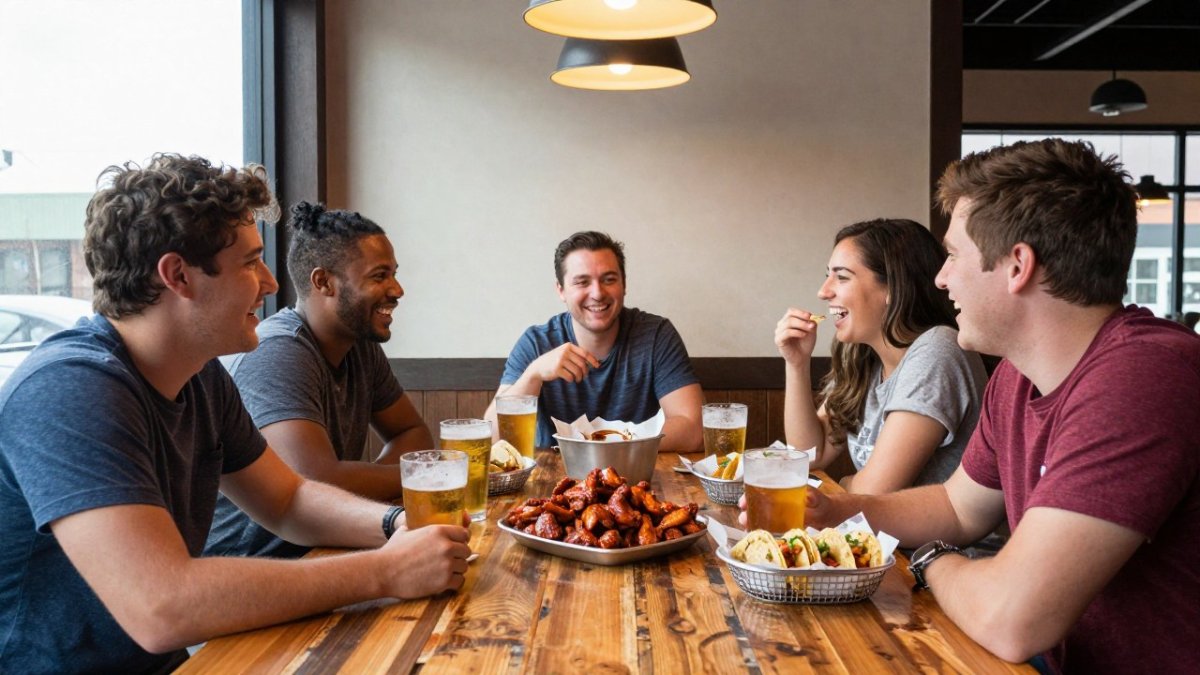
Wings and beer are the heart of any sports bar menu, and how you get them changes the experience. Dine-in gives you hot food straight from the kitchen, cold beer on draft, and a screen for the game. Delivery gives you the couch and your own fridge. Both have a place.
Late Night Food Delivery Options for Sports Fans
Late night food delivery options matter most when the game runs past midnight. West Coast matchups, overtime thrillers, and post-shift cravings all push fans to order when most kitchens have closed, and a place that keeps the kitchen running until 3 AM serves a different crowd than one that shuts down at 10.
- Kitchen hours: does the full menu run late, or just bar snacks?
- Delivery radius: how far will they actually drive at that hour?
- Order accuracy: late orders get rushed, so check the bag
- Wait times: peak hours near last call can stretch delivery windows
Game Day Logistics: Why Timing Matters
Game day logistics decide whether your food arrives hot or cold, and the biggest factor is when you order relative to kickoff. The reason is mechanical: on game day, every kitchen in the delivery radius peaks at once, and platforms route drivers to the highest-value orders first.
The Peak-Hour Crunch
A packed bar means a packed kitchen. Delivery tickets compete with dine-in tickets for the same grill space, and most kitchens prioritize guests in the room, so your order can sit in the queue while the bar fills. The same surge hits drivers: platforms raise fees and cut the effective payout per mile, so drivers cherry-pick, and your order may sit unassigned for ten or fifteen minutes.
When to Order
Order too early and your food sits. Order at kickoff and you join the rush. The sweet spot is usually 30 to 45 minutes before you want to eat, adjusted for how busy the night is.
A practical game-day schedule:
- Pregame shows (60+ minutes before kickoff): kitchens are calm, drivers are free, food lands early. Best window for large group orders.
- 30 to 45 minutes before kickoff: still workable, but expect the quoted window to stretch.
- Kickoff to end of first quarter: the worst window. Peak kitchen load plus peak driver demand.
- Halftime: a second surge as fans realize they are hungry. Avoid unless you order well before the whistle.
- Postgame: kitchens wind down, but late-night menus may be limited.
Platform Fees vs. Direct Ordering
The hidden cost of game-day delivery is not just the wait, it is the fee stack. Most third-party platforms charge a delivery fee, a service fee that is often a percentage of your subtotal, and sometimes a small-order fee, on top of a menu markup above in-store prices. Add a driver tip and the total can climb well past what you would pay at the bar.
Playoff and Championship Nights
Playoff games and championship nights are their own category. Demand can double or triple versus a regular-season game, with the biggest spikes before kickoff and again at halftime.
- Kitchen hours: does the full menu run late, or just bar snacks?
- Delivery radius: how far will they actually drive at that hour, and does the radius shrink under surge?
- Order accuracy: rushed orders get packed fast, so check the bag before the driver leaves.
- Wait times: peak hours near last call can stretch delivery windows well past the quote.
Takeout vs. Delivery vs. Dining In: A Cost-Benefit Analysis
Each option trades cost against convenience differently. Here is how they stack up.
| Option | Cost | Convenience | Food Quality | Best For |
|---|---|---|---|---|
| Dining in | Menu price plus tip | Lowest, you travel | Highest, fresh from kitchen | Game-day atmosphere, draft beer |
| Takeout | Menu price, no delivery fee | Medium, you pick up | High, short trip home | Fans near the bar |
| Delivery | Menu price plus fees and tip | Highest, stay home | Varies with transit time | Groups, late nights, bad weather |
Conclusion: Is Sports Bar Food Delivery Worth It?
Sports bar food delivery is worth it when convenience outweighs the extra cost, and that call is yours. For a group splitting wings on the couch during a late game, the fees often make sense; for a solo order of fries, they rarely do. The smart move is to know your numbers: check the total before you pay, order foods that travel well, and time your order around the game-day rush.
Frequently Asked Questions
Is it cheaper to order delivery or go to a sports bar?
Delivery often costs more because of service fees, delivery charges, and higher menu prices on some apps. If you factor in gas and tips, dining in can be cheaper for small groups. However, delivery saves time and works well for large orders where splitting fees makes sense. Check the total checkout price before deciding.
What are the best sports bar foods that travel well for delivery?
Wings, burgers, and fried appetizers hold up best if packed properly. Avoid items that get soggy, like fries or tacos, unless they are wrapped separately. Look for places that use vented containers to prevent steam from making food mushy. Thick sauces and dry rubs travel better than wet toppings.
How does sports bar food delivery compare to dining in?
Dining in gives you fresh food, immediate service, and the game-day atmosphere. Delivery trades that for convenience and the ability to eat at home. Food quality can drop during transit, especially for fried items. If you want the full experience, dine in; if you want convenience, delivery works.
What should you look for when ordering bar food for delivery?
Check the delivery radius, estimated transit time, and packaging quality. Read recent customer ratings for temperature and accuracy. Order items that reheat well, like wings or burgers. Avoid peak hours if possible to reduce wait times. Confirm the restaurant uses insulated bags or sealed containers.