 listicle
Is It Worth Driving for Happy Hour? A Cost-Benefit Guide
Table of Contents
- The Real Cost of Driving for Happy Hour
- Legal Limits and DUI Risks You Need to Know
- Safe Transportation for Happy Hour: Your Best Options
- How to Host Fantasy Football Draft Nights Without the Drive Stress
- The One Drink Myth vs. Reality
- Managing Social Pressure at Happy Hour
- When Driving for Happy Hour Actually Makes Sense
- Frequently Asked Questions
Last Updated: September 23, 2026
The Real Cost of Driving for Happy Hour
Is it worth driving for happy hour? Most people focus on drink specials and appetizer discounts but ignore the full cost: gas, time, risk, and opportunity cost.
The Direct Transportation Costs
A 15-mile round trip costs about $10 in gas and wear (at $0.67/mile per IRS rates), plus $5-10 parking in urban areas, $15-20 before you order anything.
Ride-sharing costs $12-18 each way ($24-36 round trip solo), but splits to $6-9 per person in a group of four, often cheaper than driving and parking yourself.
The Hidden Time Cost
Thirty minutes of driving at $15/hour opportunity cost equals $7.50 each way. Add parking, walking, and ordering time: you've invested an hour before happy hour starts.
The Real Cost-Benefit Framework
Here's the math: 15-mile drive, $25 on drinks and food, 90-minute stay.
Scenario A: You drive yourself
- Gas and wear: $10
- Parking: $5
- Time cost (1 hour): $7.50
- Drinks and food: $25
- Total cost: $47.50
- Risk: Potential DUI (see Legal Limits section below)
Scenario B: You take a ride-share (solo)
- Round-trip ride-share: $30
- Drinks and food: $25
- Total cost: $55
- Risk: None
Scenario C: You take a ride-share (group of 4)
- Ride-share per person: $7.50
- Drinks and food: $25
- Total cost per person: $32.50
- Risk: None
If you save $10-15 on drink specials, you barely break even driving solo. With a group and ride-sharing, the math favors going out. Solo driving to distant happy hours rarely makes financial sense.
The DUI Cost That Changes Everything
A first-time DUI costs $10,000-15,000 in fines, education programs, insurance premiums, and legal fees. Add a 6-12 month license suspension and background check flags that affect hiring and promotions.
One drink might feel safe, but the expected cost of driving after any alcohol consumption far exceeds happy hour savings. The potential downside is catastrophic.
The Decision Framework
Driving for happy hour is worth it only if:
- The venue is under 15 minutes away, AND
- You're not drinking (designated driver or non-alcoholic beverages), OR
- You're splitting a ride-share with 3+ people, making the per-person cost under $10 round trip
Outside these conditions, the math doesn't work. The drink specials don't justify the transportation cost, time investment, or legal risk.
Legal Limits and DUI Risks You Need to Know
In all states, the legal BAC limit is 0.08% for drivers 21+, 0.02% for under 21, and 0.04% for commercial drivers.
One standard drink raises BAC by 0.015-0.020% depending on weight, food, and metabolism. A 150-pound person with two beers over an hour reaches 0.04% BAC; three drinks approaches the legal limit.
The consequences of a DUI conviction are severe. A first offense typically results in license suspension (often 6-12 months), fines ranging from hundreds to thousands of dollars, mandatory alcohol education programs, and a permanent criminal record. Insurance rates spike dramatically. Some employers conduct background checks that flag DUI convictions. Professional licenses in certain fields can be revoked.
The risk extends beyond you. Impaired driving puts passengers and other drivers at serious risk. National Highway Traffic Safety Administration data on alcohol-impaired driving fatalities shows that thousands of people die each year in crashes involving alcohol-impaired drivers.
This is where the math of "is it worth driving for happy hour" becomes clear. A $15 drink special isn't worth a $10,000 legal bill, a suspended license, and the guilt of potentially harming someone.
Safe Transportation for Happy Hour: Your Best Options
Safe transportation means choosing a method where you're not behind the wheel after drinking.
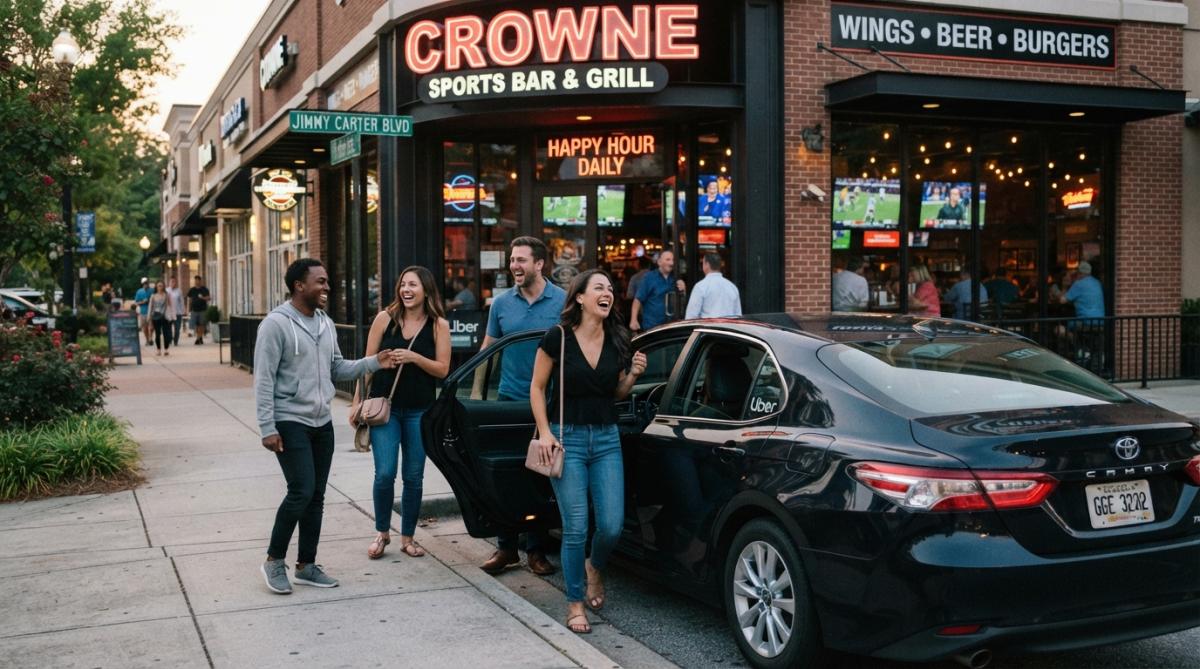
Ride-sharing services like Uber and Lyft cost $12-25 per 5-10 mile ride. Convenient and eliminates DUI risk, but costs add up quickly for solo trips.
Designated driver rotation costs nothing but requires trust and enforcement. Peer pressure can undermine the commitment.
Public transportation costs under $5 round trip and eliminates DUI risk, but limited schedules and routes may not fit your timeline.
Staying home or choosing a closer venue makes sense if the destination is 30+ minutes away, drive time and cost exceed drink savings.
| Transportation Option | Cost | Convenience | Safety | Best For |
|---|---|---|---|---|
| Ride-sharing | $12-25 per trip | High (on-demand) | Excellent | Groups, peak hours |
| Designated driver | Free | Medium (depends on group) | Excellent | Regular group outings |
| Public transit | $2-5 round trip | Low (limited schedules) | Excellent | Urban areas, planned trips |
| Taxi | $12-25 per trip | Medium (call-ahead) | Excellent | When ride-share unavailable |
| Drive yourself (sober) | Gas only | High | Excellent | No alcohol consumption |
How to Host Fantasy Football Draft Nights Without the Drive Stress
Fantasy football draft nights show why driving for happy hour often fails: multiple hours and rounds of drinks mean rising BAC.
Bars like Crowne Sports Bar & Grill offer atmosphere and multiple screens, but a 30+ minute drive means committing to ride-share or staying sober.
Better approach: host at a central location with food delivery and a laptop for the draft board. Everyone drinks responsibly with no driving. Cost per person is often lower.
If you want the bar atmosphere without the drive stress, choose a venue close to where most attendees live. A 10-minute drive is manageable. A 30-minute drive means you're paying for transportation and limiting your drinking, which defeats the purpose of happy hour savings.
The One Drink Myth vs. Reality
One drink doesn't guarantee you're under the legal limit, and it definitely doesn't mean you're safe to drive. This is the myth that gets people into trouble.
The problem is individual variation. Two people of different weights, eating different foods, with different metabolic rates will have completely different BAC levels after one drink. A 120-pound person might be at 0.025% BAC after one beer. A 200-pound person might be at 0.015%. Neither is over the legal limit, but both have impaired judgment, slower reaction times, and reduced coordination.
Impairment starts before you hit the legal limit. Research shows that reaction time slows and decision-making deteriorates at BAC levels as low as 0.02%. You might feel fine. Your body is already compromised.
The one-drink myth also ignores the reality of happy hour. You don't stop at one drink. You arrive, order a drink, chat for 20 minutes, finish it, and order another. An hour passes. Two drinks are down. You feel fine. You're probably around 0.04% BAC if you're average weight. You're not legally impaired yet, but you're halfway there.
This is where the cost-benefit of driving for happy hour becomes dangerous.
Managing Social Pressure at Happy Hour
Social pressure at happy hour is real, and it often pushes people toward decisions they wouldn't make alone. The pressure is especially acute at workplace happy hours, where declining drinks or leaving early can be misinterpreted as lack of team spirit or professional disengagement.
The Workplace Happy Hour Trap
Practical Scripts for Declining Drinks
When someone offers you a drink:
- "I'm driving tonight, so I'm sticking with water/soda. But I'll grab the next round of appetizers."
- "I've got an early morning tomorrow, so I'm taking it easy tonight."
- "I'm on medication that doesn't mix well with alcohol, so I'm good with this."
- "I'm the designated driver for a friend later, so I'm staying sharp."
When someone pushes back:
- "I appreciate it, but I'm good. I'm enjoying the food though, have you tried the wings?"
- "I'm not much of a drinker tonight, but let's grab lunch next week."
- "I'm really focused on [project/goal], so I'm keeping a clear head."
The Non-Alcoholic Drink Strategy
Recognizing Toxic Group Dynamics
If you feel pressured to drink and drive at a workplace event, that's a sign to:
- Attend briefly and leave early
- Attend but use a ride-share or designated driver
- Skip the event entirely and build relationships in other contexts
- Report the pressure to HR if it's creating a hostile or unsafe environment
When Driving for Happy Hour Actually Makes Sense
Driving for happy hour makes sense in specific, limited scenarios. Understand when the math actually works in your favor.
Frequently Asked Questions
What is the legal blood alcohol content limit for driving?
The legal limit for drivers 21 and older is 0.08% BAC. However, impairment can begin at lower levels. Some states enforce 'implied consent' laws, meaning you automatically agree to a breathalyzer or field sobriety test when pulled over. A single drink can push you close to or over the limit depending on body weight, food intake, and metabolism. The safest approach is zero alcohol before driving.
How much does it really cost to drive for happy hour when you factor in gas and parking?
Gas costs depend on distance and your vehicle's fuel efficiency, but a 10-mile round trip typically costs $2-5 in fuel alone. Add parking (often $5-15 in urban areas), potential tolls, and vehicle wear-and-tear (roughly 67 cents per mile according to IRS estimates). A happy hour drink special saving you $3-5 disappears quickly once transportation costs are added. Rideshare eliminates this math entirely, though upfront costs are higher.
What are the best safe transportation alternatives to driving after happy hour?
Designated driver arrangements, rideshare apps like Uber and Lyft, traditional taxi services, and public transportation are all reliable options. Many venues now partner with local rideshare services for discounted codes. Some bars offer 'safe ride home' programs. Public transit is often the cheapest option if available in your area. The key is deciding your transportation method before you arrive, not after drinking.
Can one drink really affect my ability to drive safely?
Yes. Even a single drink can slow reaction time, impair judgment, and reduce coordination, especially on an empty stomach. BAC rises faster in women and lighter individuals. Medications, fatigue, and stress amplify alcohol's effects. Field sobriety tests measure impairment, not just BAC. Legal consequences for driving under the influence (DUI) include license suspension, fines, mandatory alcohol education programs, and a permanent criminal record that affects employment and insurance rates.
The real question isn't whether happy hour is worth the drive. It's whether you can enjoy happy hour without driving. If you can't, you've already answered the question. Choose a closer venue, order delivery, or skip it this week. The savings on a $15 drink special disappear against the cost of a DUI, an accident, or worse. At Crowne Sports Bar & Grill, we're here when you can get here safely. That's the only math that matters.